Collector
 Bestseller
Photographs are of our actual stock, taken at the nursery. Plants are living things — expect small differences in shape and leaf count from the plant shown.
Succulents & Cacti
Adenium (Desert Rose)
Adenium obesum
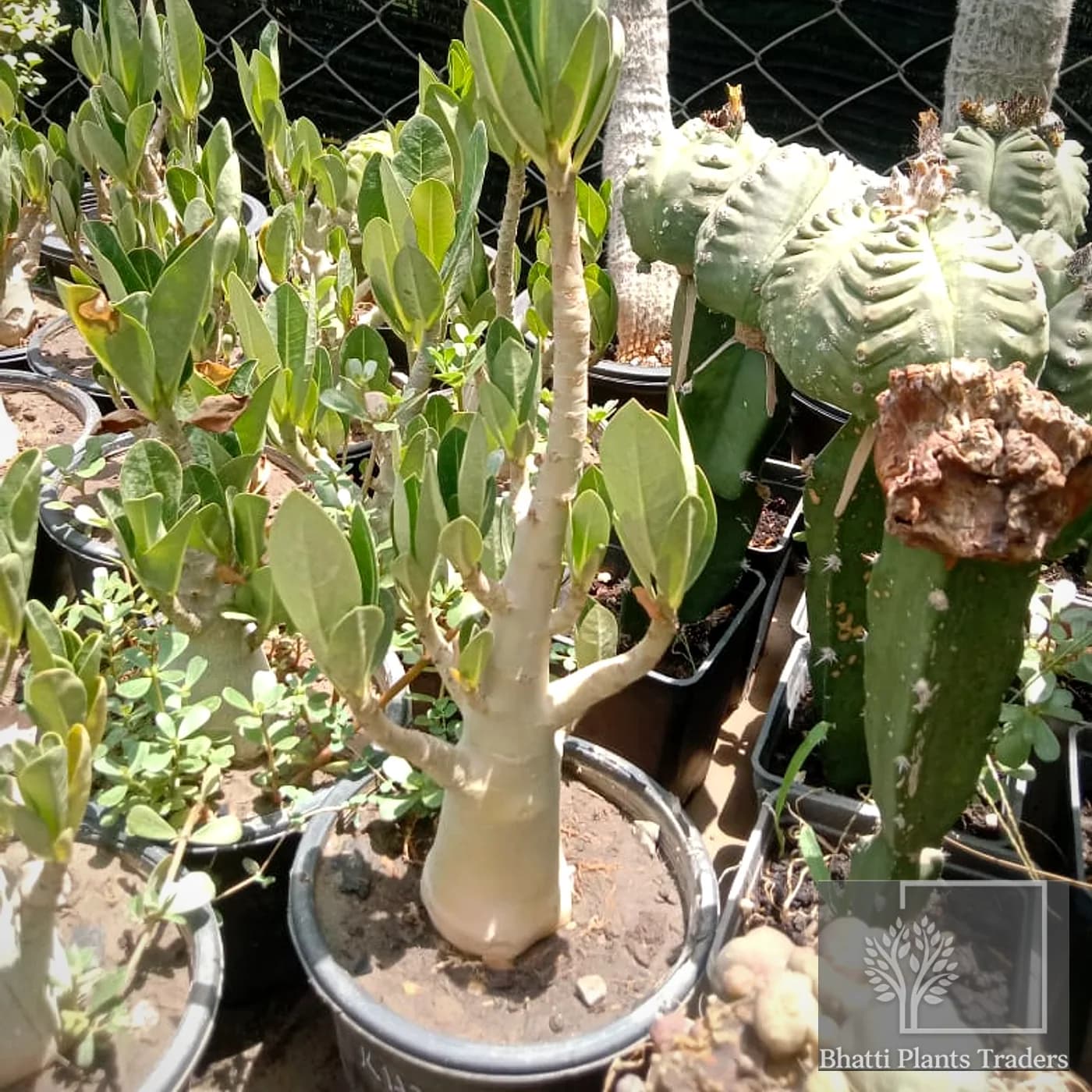
The desert rose is the plant Pakistani summers were made for. It stores water in a swollen, bottle-shaped caudex at the base, throws deep pink and red trumpet flowers from March until October, and asks for full, unshaded sun — the conditions that flatten most other flowering plants.
Caudex thickness is what determines price and it is entirely a function of age and sun. Ours are grown from seed on the roof of the nursery, unshaded, for a minimum of three years before they are offered, which produces the squat, heavy base collectors want rather than the thin-stemmed grafted imports sold elsewhere.
- Seed-grown in full sun for 3+ years — genuine thick caudex, not grafted
- Flowers continuously from March to October
- Thrives in 45°C heat where most flowering plants give up
Rs 1,500for the Small, 12 inch pot
Inclusive of pot and mix. Delivery Rs 350, free over Rs 5,000.
1
4.9(87 reviews) In stock, dispatched in 1–2 working days
Packed by hand
Dispatched in 1–2 working days
7-day guarantee
Replaced or refunded if damaged
Grown by us
Never bought in and resold
At a glance
- Mature size
- 45–90 cm with a 10–25 cm caudex
- Growth rate
- Moderate in summer, fully dormant in winter
- Difficulty
- Moderate to keep
- Around pets
- Keep away from cats, dogs and small children
Full sunRooftopBalconyTerrace
How to look after your Adenium (Desert Rose)
Written for Pakistani conditions — long hot summers, dry winter air, and hard tap water. Follow this rather than advice written for a temperate climate.
- Light
- Full, direct sun. The swollen caudex only fattens properly with strong light; in shade the plant grows leggy and refuses to flower.
- Water
- Water freely during the growing season while it is in leaf. When it drops its leaves in late autumn, stop almost completely — a splash once a month is enough.
- Humidity
- Low to moderate. Airflow around the caudex is important.
- Soil
- Very sharp drainage — 60% grit to 40% organic. Terracotta suits these plants better than plastic.
- Feeding
- High-potassium feed every 3 weeks in spring and summer to encourage flowering. Nothing in dormancy.
- Temperature
- 15–45°C in growth. Keep above 10°C and bone dry through winter dormancy.
If something goes wrong
Leaves yellowing and dropping in autumn
Why it happens: Normal seasonal dormancy, not a problem.
What to do: Reduce water sharply and wait. Growth restarts as temperatures rise in March.
Soft, squashy caudex
Why it happens: Rot from water during dormancy.
What to do: Usually terminal once soft. Prevent it by keeping the plant dry below 15°C.
No flowers on a mature plant
Why it happens: Too little sun or too much nitrogen.
What to do: Move into full sun and switch to a high-potassium feed.
You might also like
Collector
Rare