Rare
 Collector
Photographs are of our actual stock, taken at the nursery. Plants are living things — expect small differences in shape and leaf count from the plant shown.
Succulents & Cacti
Astrophytum
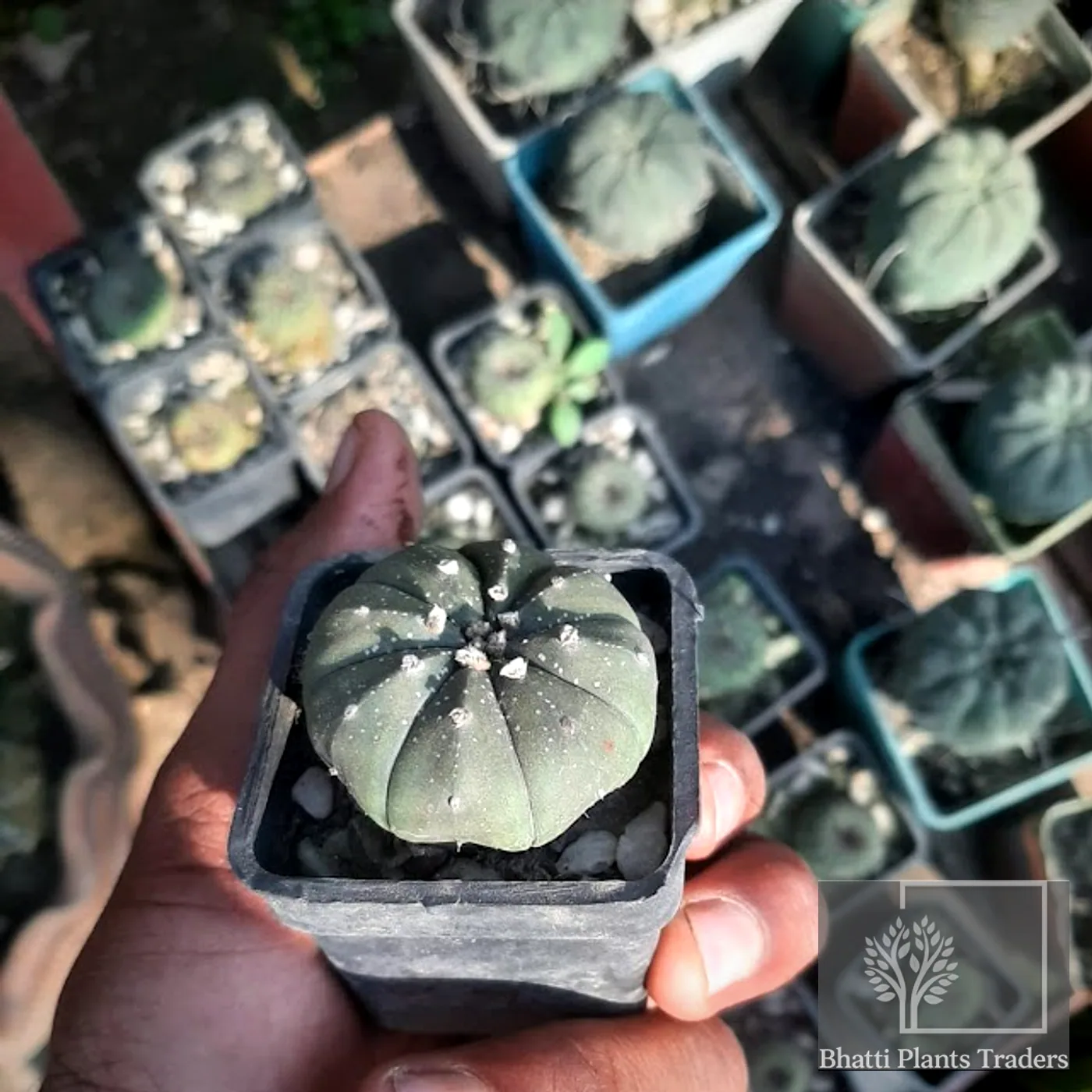
Astrophytum myriostigma
The bishop’s cap is a cactus without spines — a five-ribbed star flecked all over with tiny white woolly scales that give it the texture of weathered limestone. It is one of the most collectable cacti in the world and one of the slowest.
A plant the size of a fist represents several years of growth. In return it asks for almost nothing: full sun, gritty soil, and absolutely no water between November and March.
- Completely spineless — safe to handle and to place indoors
- White-flecked ribs with a stone-like surface
- Very slow-growing; every plant represents years of care
Rs 2,750for the 10 inch pot
Inclusive of pot and mix. Delivery Rs 350, free over Rs 5,000.
1
4.9(16 reviews)Only 9 left
Packed by hand
Dispatched in 1–2 working days
7-day guarantee
Replaced or refunded if damaged
Grown by us
Never bought in and resold
At a glance
- Mature size
- 10–20 cm
- Growth rate
- Very slow
- Difficulty
- Moderate to keep
- Around pets
- Non-toxic — safe if chewed
Full sunWindowsillCollector shelf
How to look after your Astrophytum
Written for Pakistani conditions — long hot summers, dry winter air, and hard tap water. Follow this rather than advice written for a temperate climate.
- Light
- Full sun. Four to six hours of direct light minimum — a rooftop, balcony rail or south-facing sill. Acclimatise gradually if the plant has been indoors.
- Water
- Soak thoroughly, then let the mix dry completely before watering again. Fortnightly in summer heat, and nothing at all from mid-November to late February.
- Humidity
- Low. Good airflow matters more than humidity — stagnant, damp air invites fungal spotting.
- Soil
- Gritty mineral mix: coarse sand, perlite and a little compost. Our plants ship in this blend already.
- Feeding
- Low-nitrogen cactus feed once in April and once in July.
- Temperature
- 10–45°C. Genuinely tolerates Pakistani summer heat. Keep dry and above 5°C in winter.
If something goes wrong
Soft brown patch at soil level
Why it happens: Rot from winter watering.
What to do: Cut above the rot with a sterile blade, callus the cut for a week in shade, then re-root in dry mix.
Pale, stretched, narrow new growth
Why it happens: Etiolation from too little light.
What to do: Increase sun gradually over two weeks. The stretched section will not shrink back, but new growth returns to normal.
White cottony specks in the crevices
Why it happens: Mealybug.
What to do: Dab each cluster with a cotton bud dipped in rubbing alcohol, and repeat weekly for a month.
You might also like
Staff pick
Rare
Collector