
Bestseller
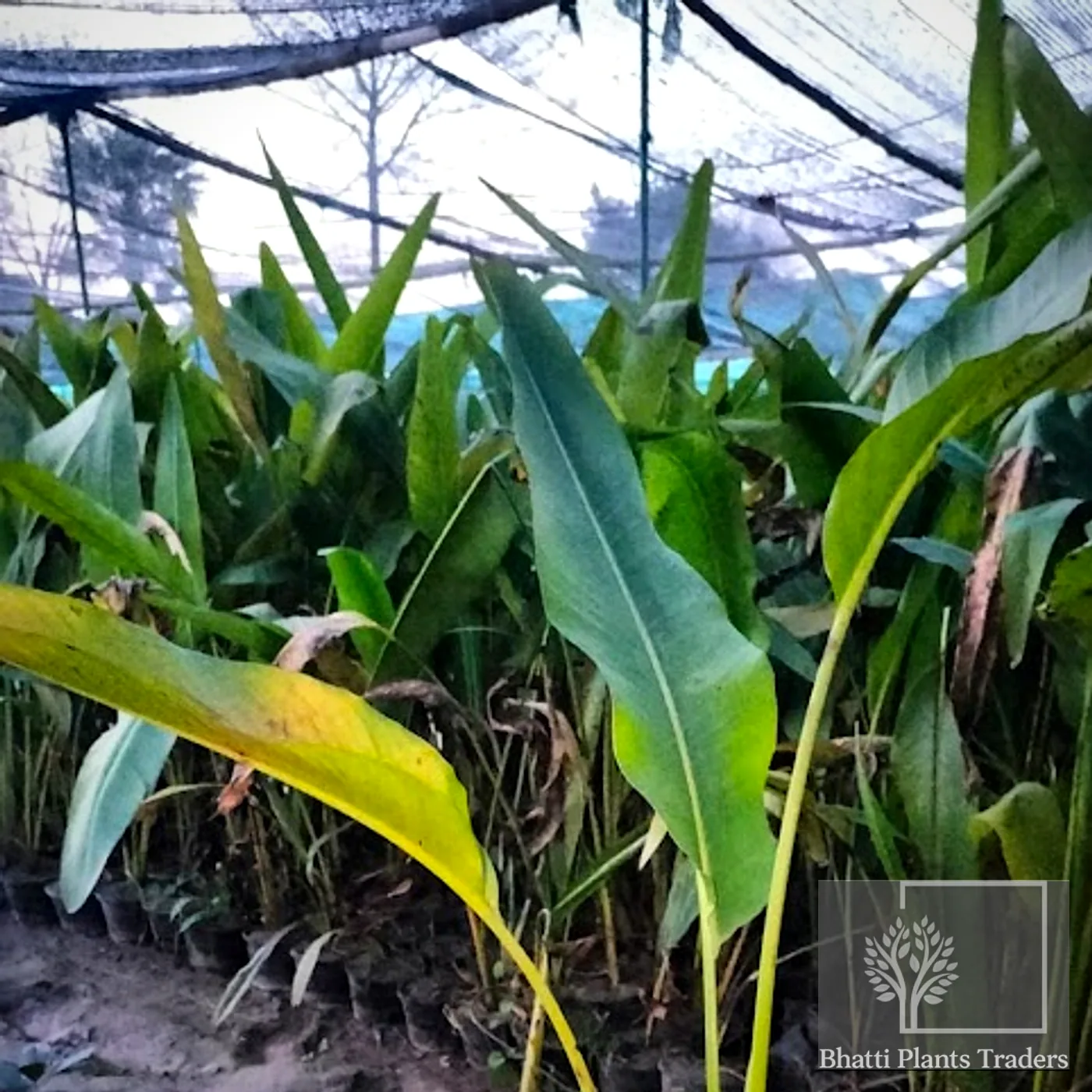
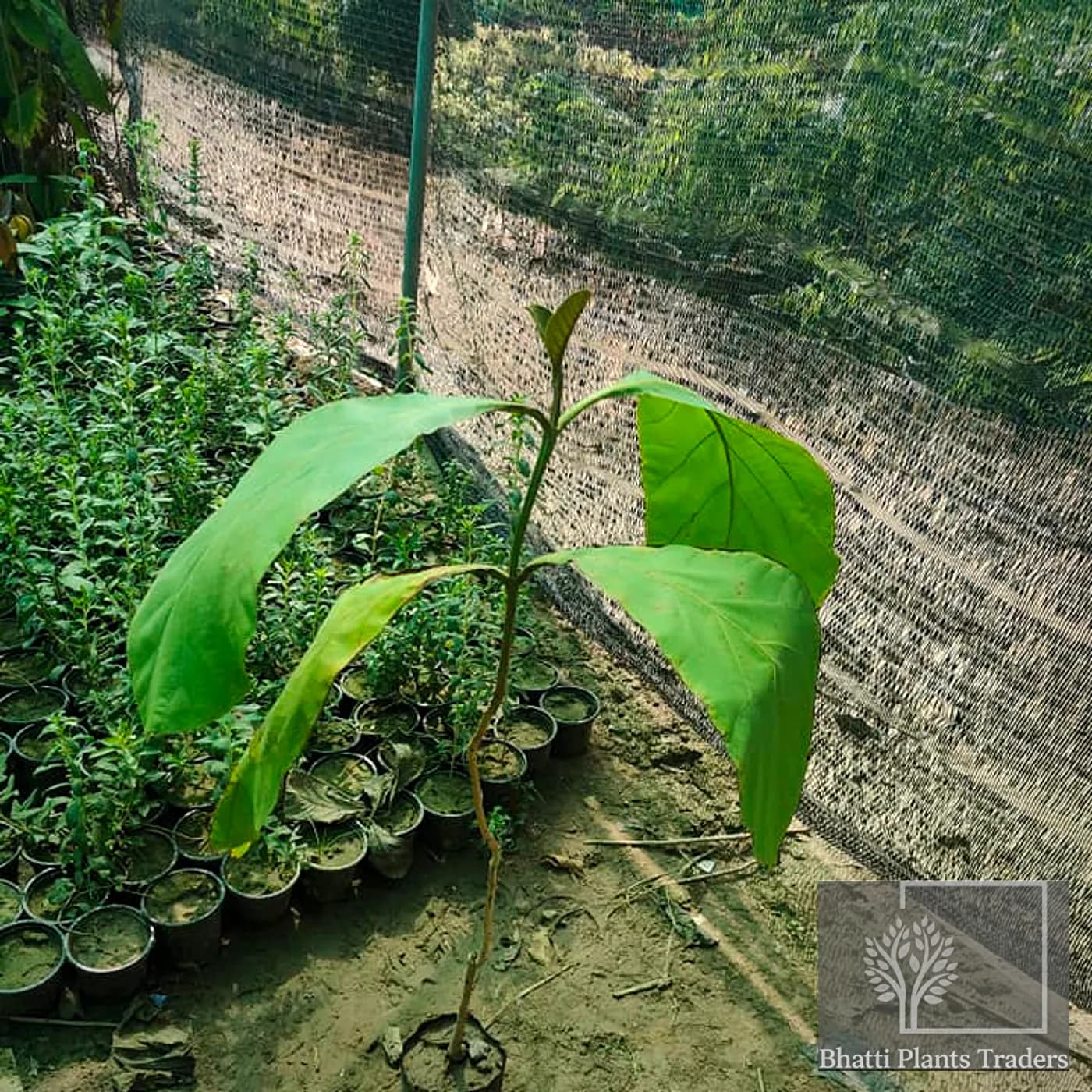
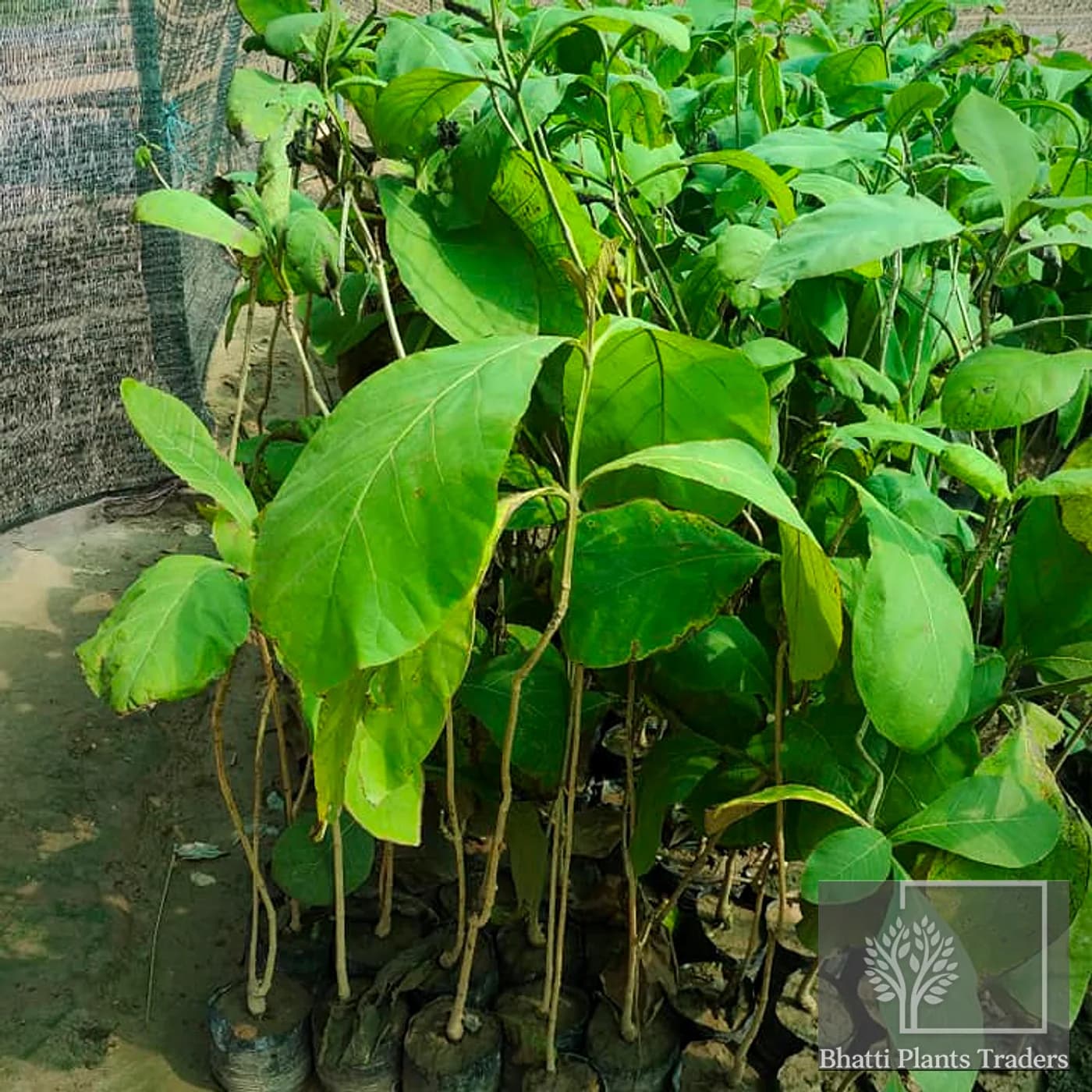
Photographs are of our actual stock, taken at the nursery. Plants are living things — expect small differences in shape and leaf count from the plant shown.
Palms & Trees
Banana Plant
Musa spp.
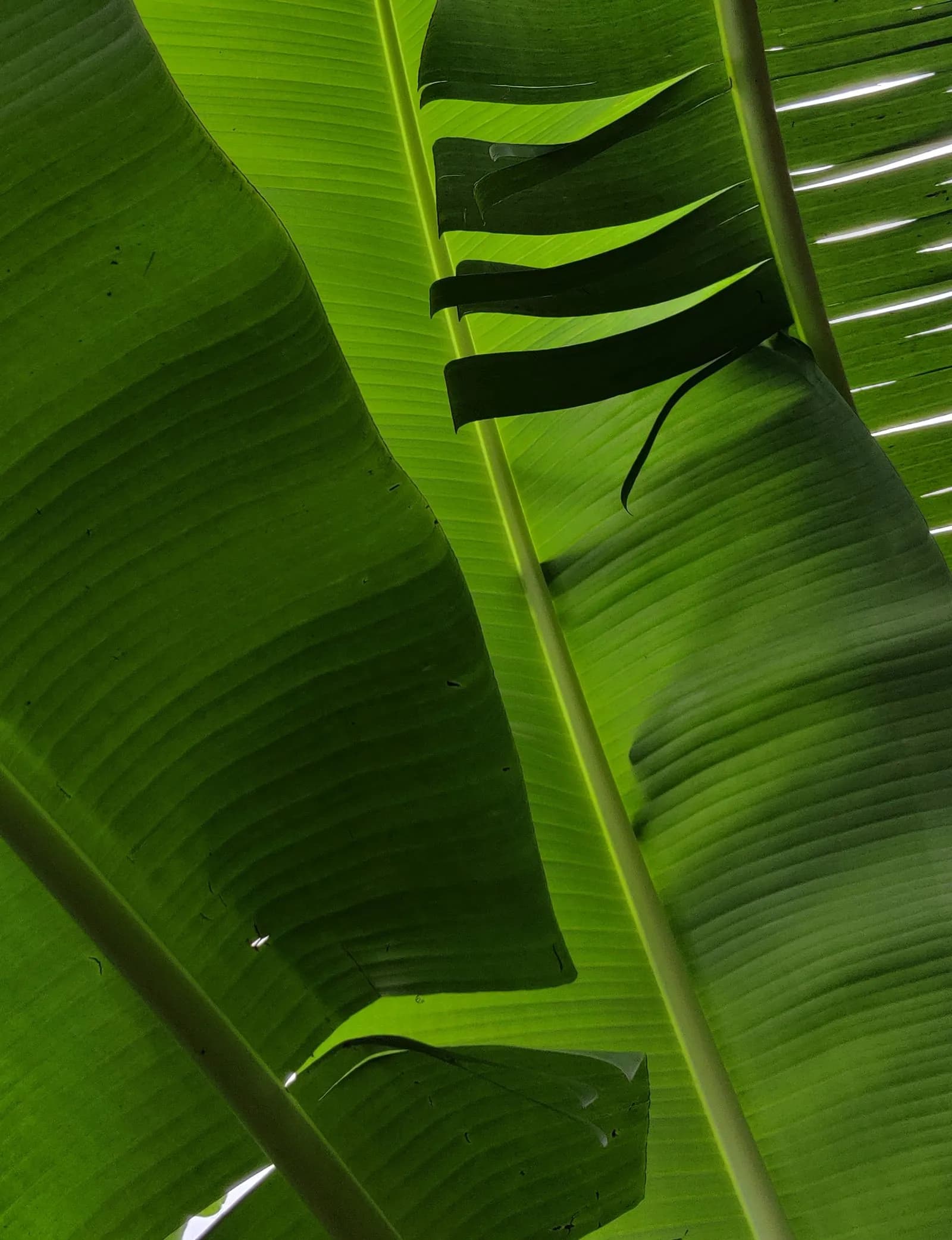
Nothing else gives tropical scale as quickly. A banana plant put in the ground in March will be over two metres with leaves a metre long by August. In a courtyard or beside a pool it changes the character of a space in a single season.
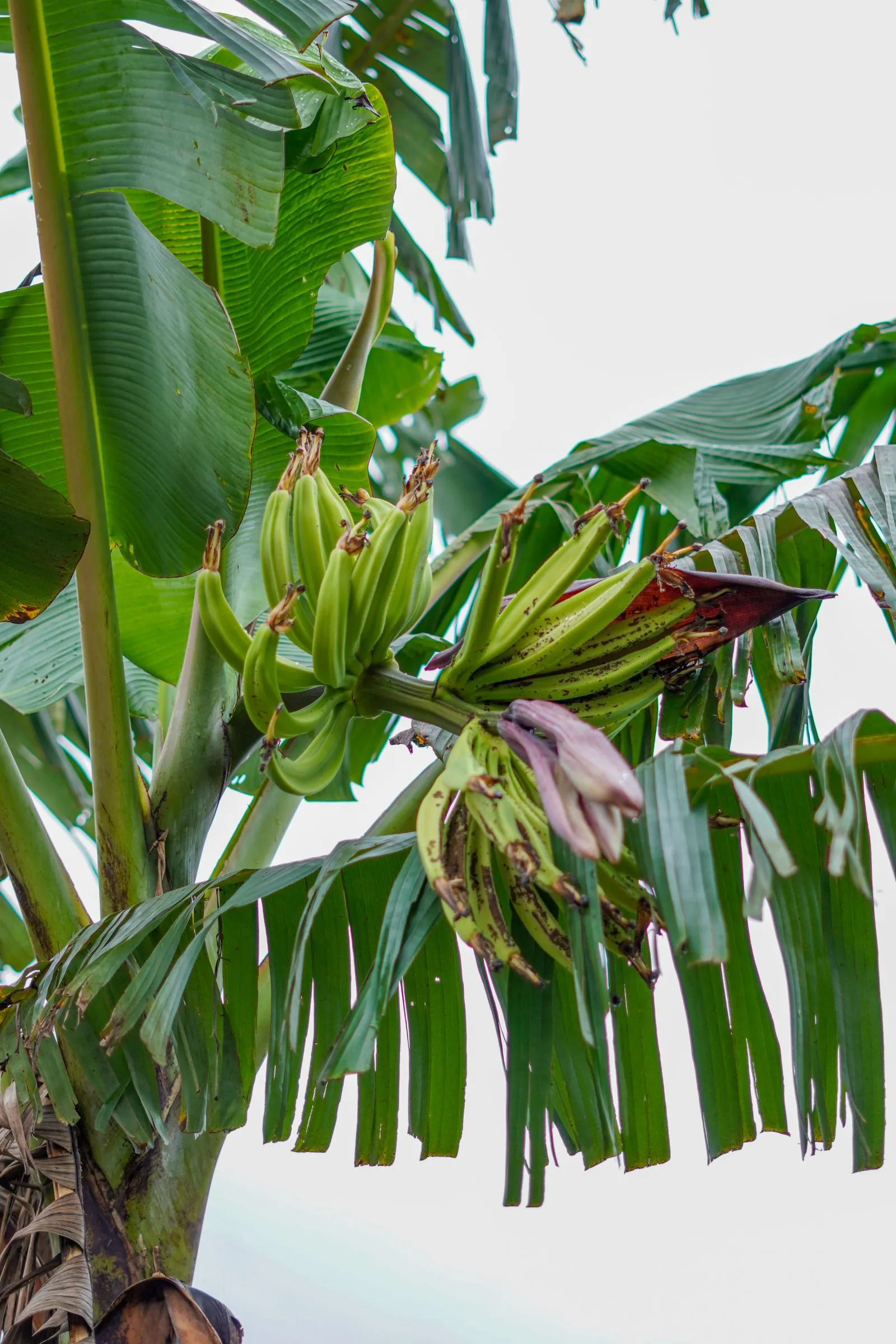
It is hungry and thirsty — bananas want rich soil, heavy feeding and a lot of water, which is the opposite of most things we sell. Give it those and it will fruit from the second year. Each stem fruits once and then dies, replaced by the suckers around it.
- Over 2 m in a single season from a good-sized plant
- Fruits from the second year with heavy feeding and water
- Each stem fruits once, then is replaced by its suckers
Rs 600for the 2 ft sucker
Inclusive of pot and mix. Delivery Rs 350, free over Rs 5,000.
1
4.7(42 reviews) In stock, dispatched in 1–2 working days
Packed by hand
Dispatched in 1–2 working days
7-day guarantee
Replaced or refunded if damaged
Grown by us
Never bought in and resold
At a glance
- Mature size
- 2.5–4 m
- Growth rate
- Very fast
- Difficulty
- Easy to keep
- Around pets
- Non-toxic — safe if chewed
Full sunCourtyardPoolsideGarden
How to look after your Banana Plant
Written for Pakistani conditions — long hot summers, dry winter air, and hard tap water. Follow this rather than advice written for a temperate climate.
- Light
- Most prefer full sun once established; indoor palms want bright, filtered light.
- Water
- Deeply twice a week in summer, weekly in winter. Palms dislike both drought and standing water.
- Humidity
- Moderate. Indoor palms benefit from raised humidity in winter.
- Soil
- Sandy, free-draining soil. Palms rot at the crown in heavy, wet ground.
- Feeding
- Specialist palm feed containing magnesium and manganese, three times a year. Ordinary NPK causes yellow banding.
- Temperature
- 15–48°C for outdoor species. Protect indoor palms below 12°C.
If something goes wrong
Yellow bands on older fronds
Why it happens: Magnesium or potassium deficiency — very common in palms.
What to do: Apply a palm-specific feed. Do not remove yellowing fronds; the palm is still drawing nutrients from them.
Brown, dry frond tips
Why it happens: Dry air, salt build-up, or under-watering.
What to do: Water deeply, flush the soil, and raise humidity for indoor palms.
Soft, foul-smelling crown
Why it happens: Crown rot from water sitting in the growing point.
What to do: Usually fatal. Prevent it by never watering into the crown.
Arecaceae
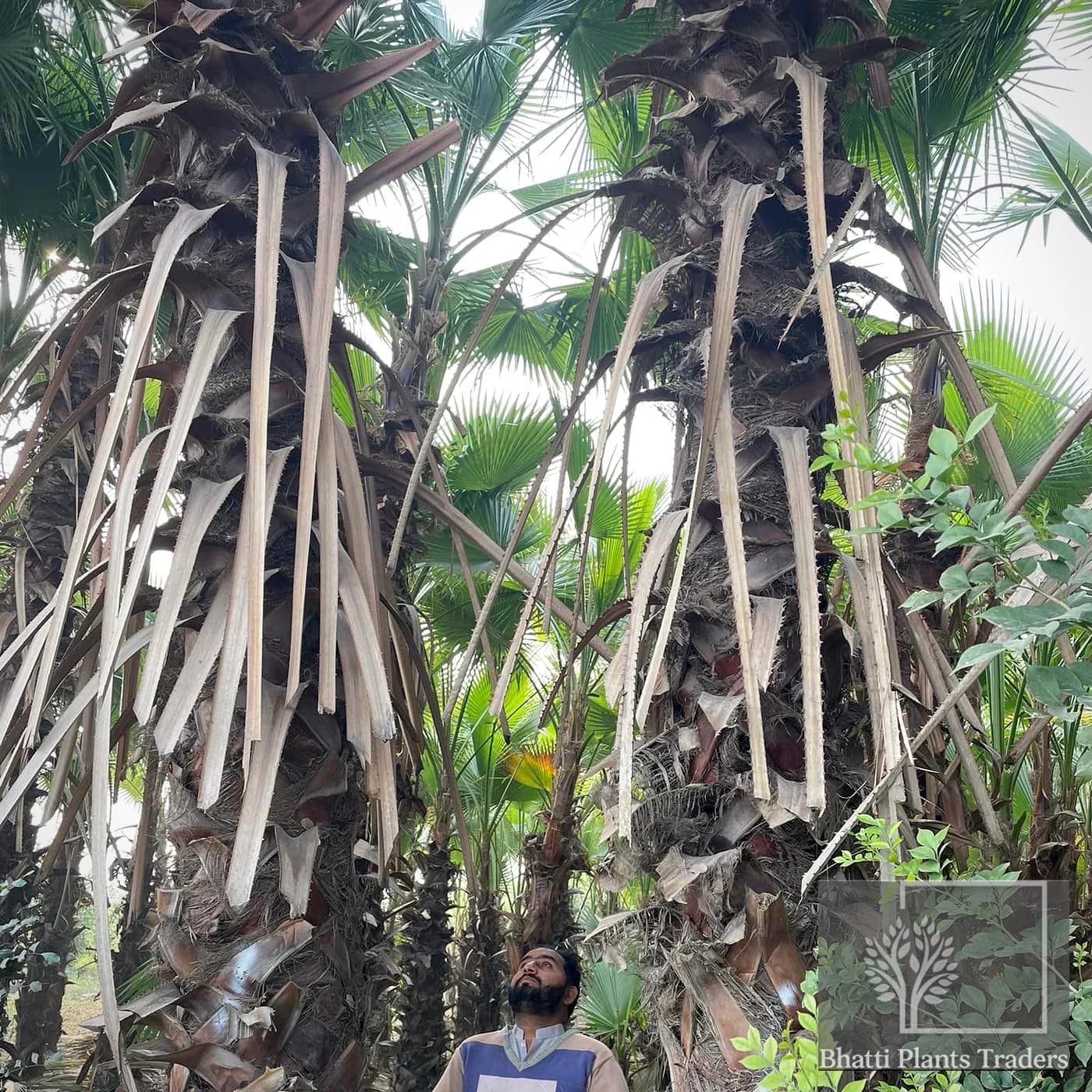
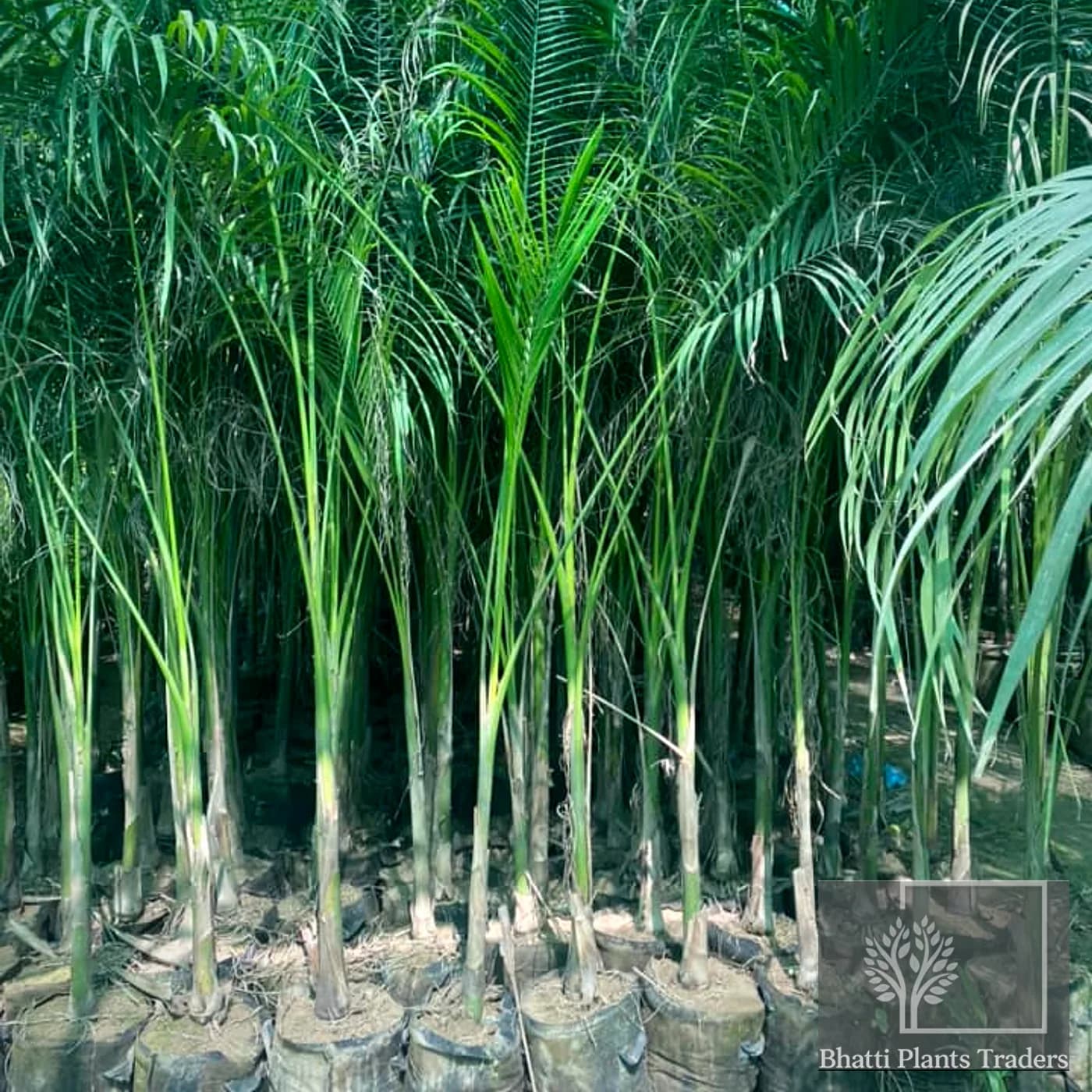
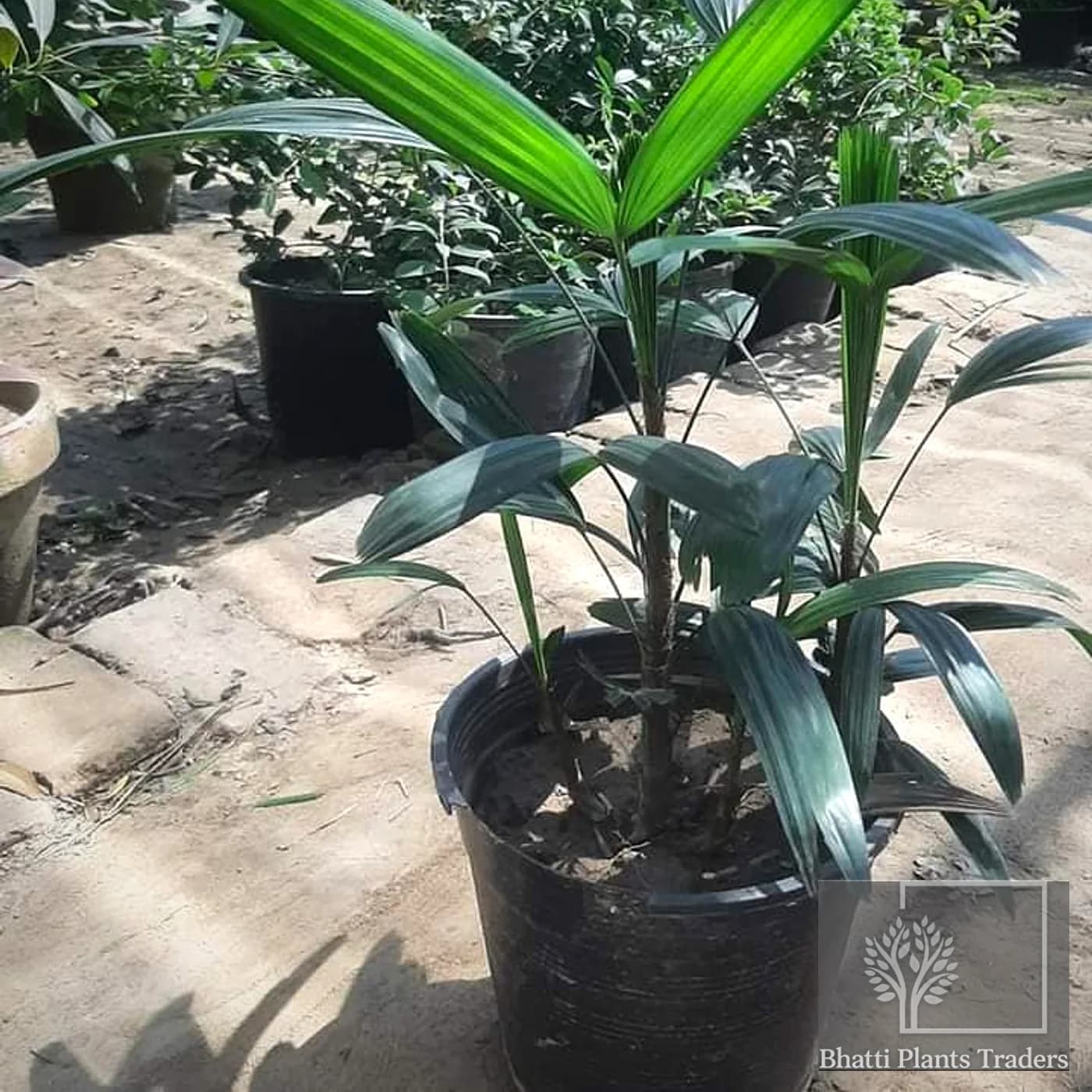
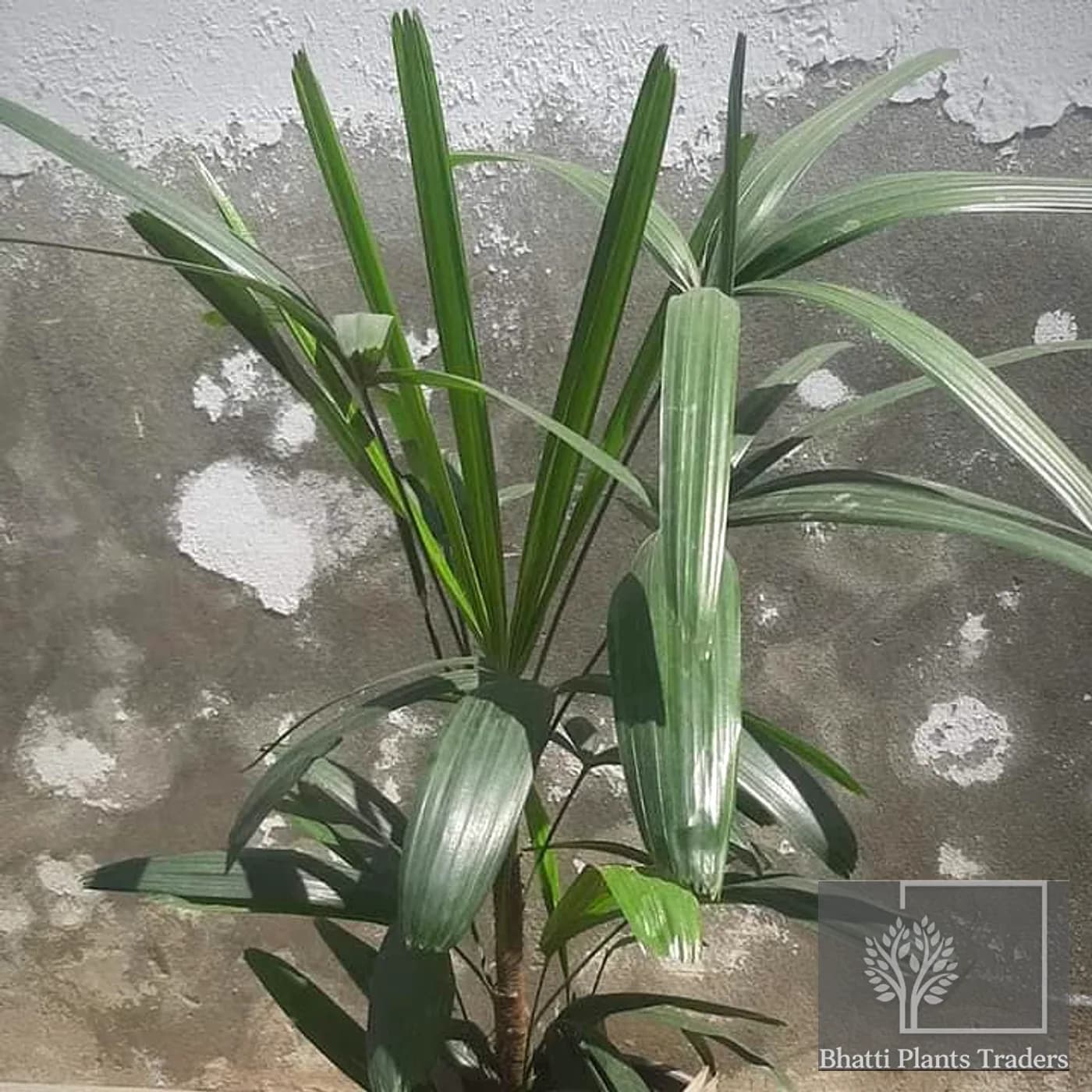
We grow 11 palms
They differ in leaf shape, mature size and colour — compare them side by side before you choose.
Staff pick
Staff pick
You might also like
Rare
Staff pick