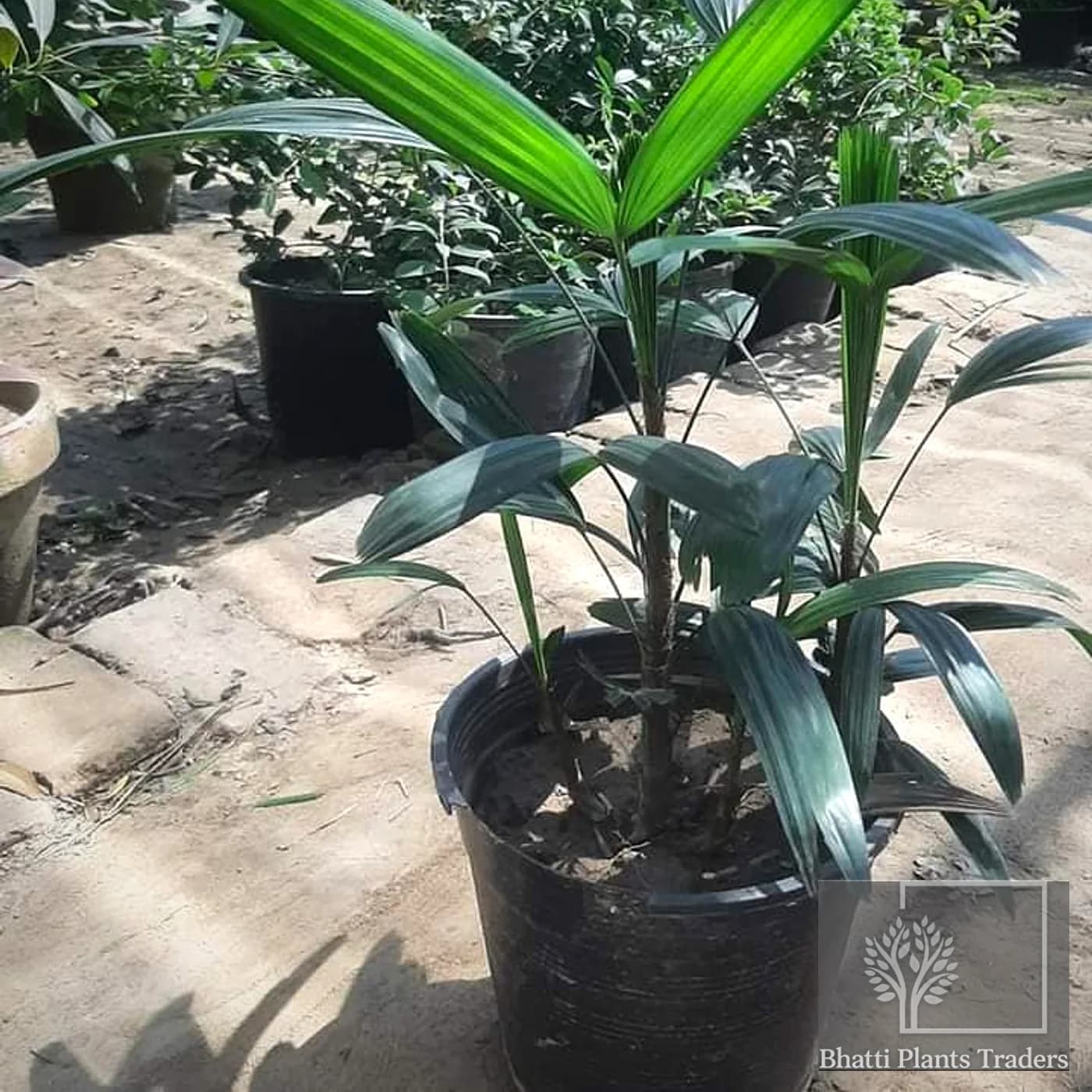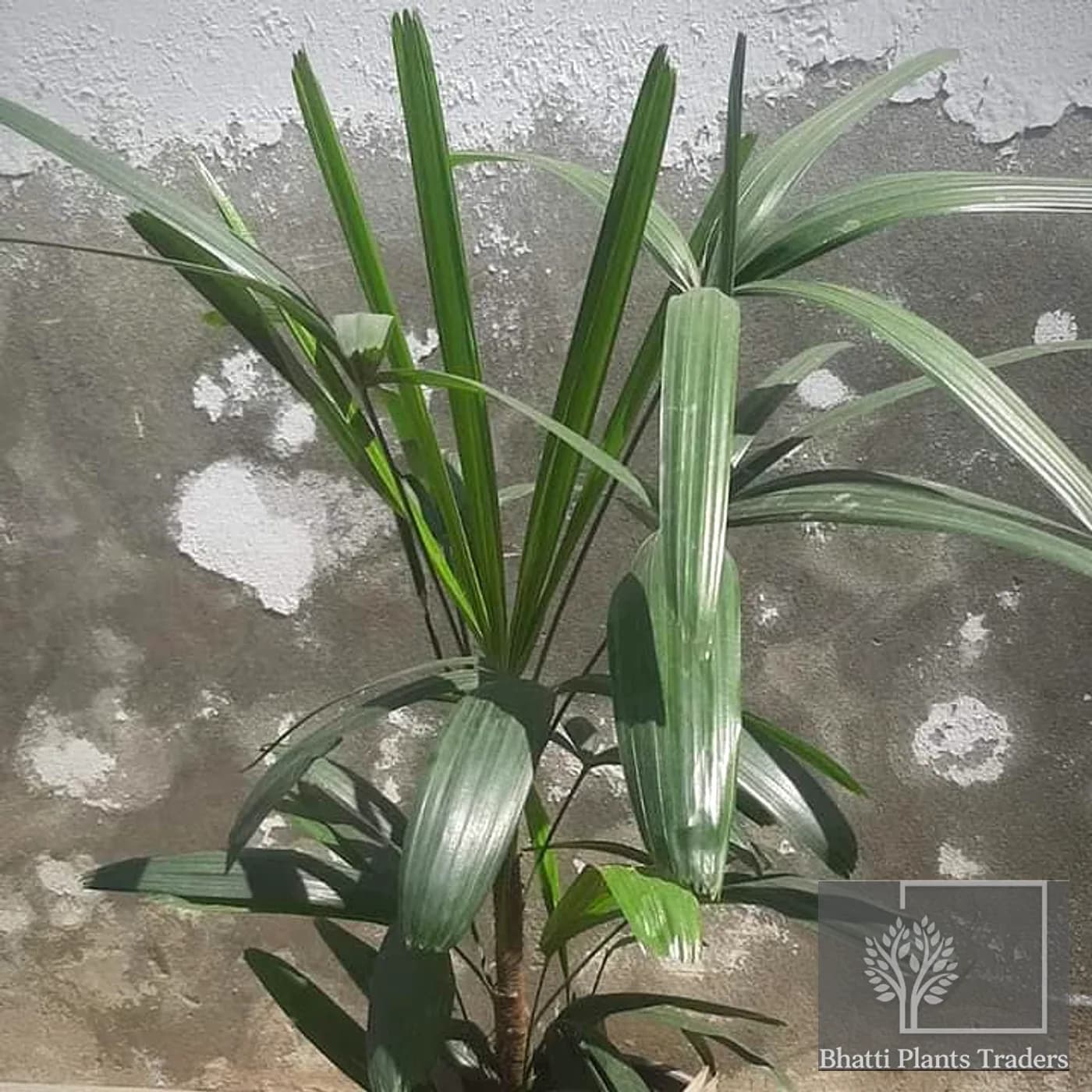
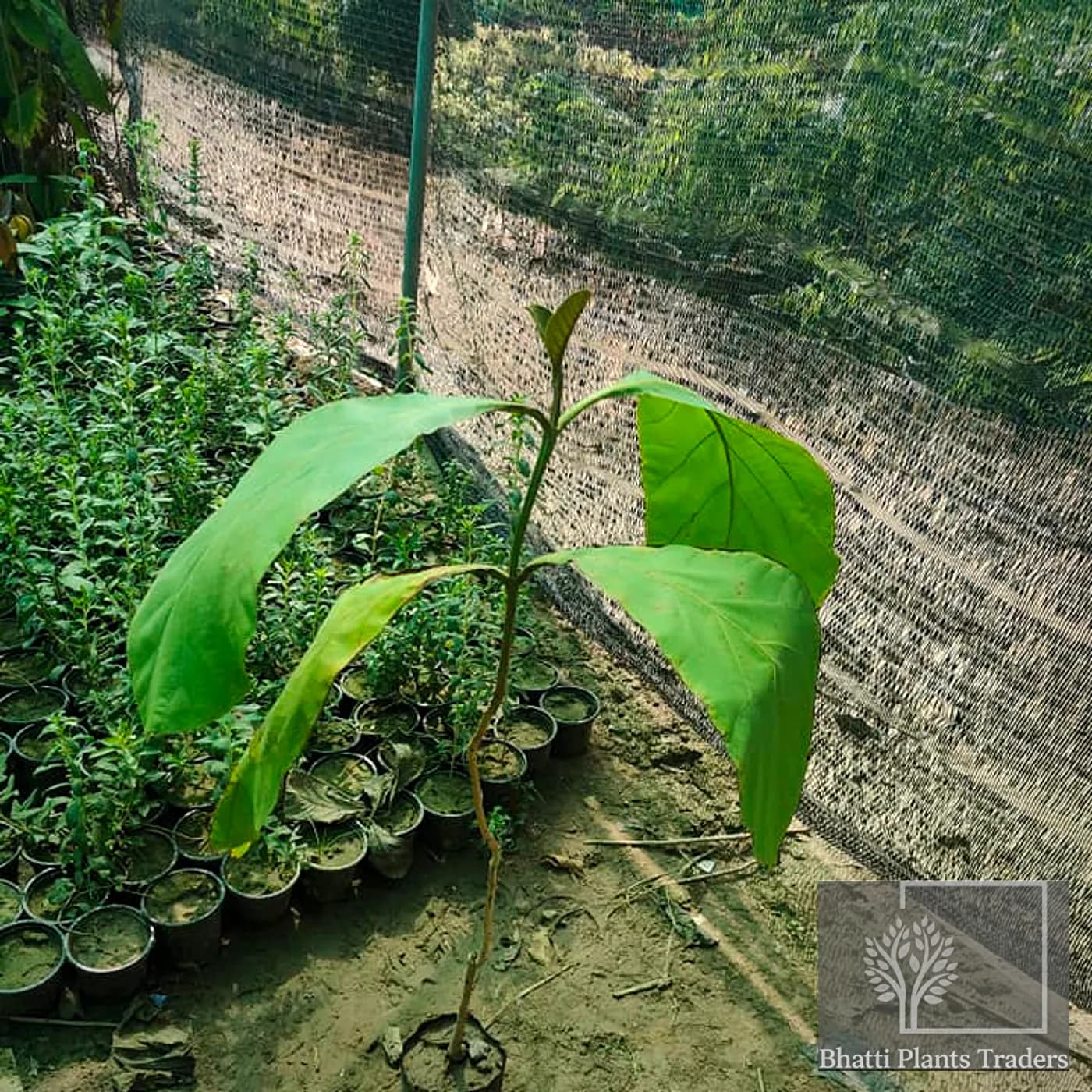
Photographs are of our actual stock, taken at the nursery. Plants are living things — expect small differences in shape and leaf count from the plant shown.
Palms & Trees
Teak (Sagwan)
Tectona grandis
Sagwan is planted as a long-term asset as much as a tree. Teak timber is among the most valuable in the world, the tree grows straight and fast in the Pakistani plains given water, and a well-managed plantation is a genuine inheritance.
It is also a striking ornamental in its own right — enormous leaves, up to half a metre across on young trees, and sprays of small white flowers in the monsoon. Our stock is raised from selected seed rather than roadside collection.
- Raised from selected seed, not roadside collection
- Enormous leaves — up to 50 cm across on young trees
- Grown widely as a long-term timber investment
Rs 500for the 3 ft sapling
Inclusive of pot and mix. Delivery Rs 350, free over Rs 5,000.
1
4.7(21 reviews) In stock, dispatched in 1–2 working days
Packed by hand
Dispatched in 1–2 working days
7-day guarantee
Replaced or refunded if damaged
Grown by us
Never bought in and resold
At a glance
- Mature size
- 20–30 m over decades
- Growth rate
- Fast with water
- Difficulty
- Easy to keep
- Around pets
- Non-toxic — safe if chewed
Full sunPlantationFarmLarge garden
How to look after your Teak (Sagwan)
Written for Pakistani conditions — long hot summers, dry winter air, and hard tap water. Follow this rather than advice written for a temperate climate.
- Light
- Full sun.
- Water
- Water deeply twice a week for the first two years while roots establish. Mature trees need little supplementary water.
- Humidity
- Ambient.
- Soil
- Deep soil with room for the root plate to spread. Check for buried rubble before planting.
- Feeding
- Well-rotted manure around the drip line each winter.
- Temperature
- Fully hardy across the Pakistani plains.
If something goes wrong
Slow growth in the first year
Why it happens: The tree is investing in roots before shoots.
What to do: Normal. Keep it watered and mulched; visible growth accelerates in year two.
Leaning after wind
Why it happens: Roots not yet anchored.
What to do: Stake low and loosely, allowing the trunk to flex — rigid staking produces a weak trunk.
You might also like
Staff pick