Bestseller
 Staff pick
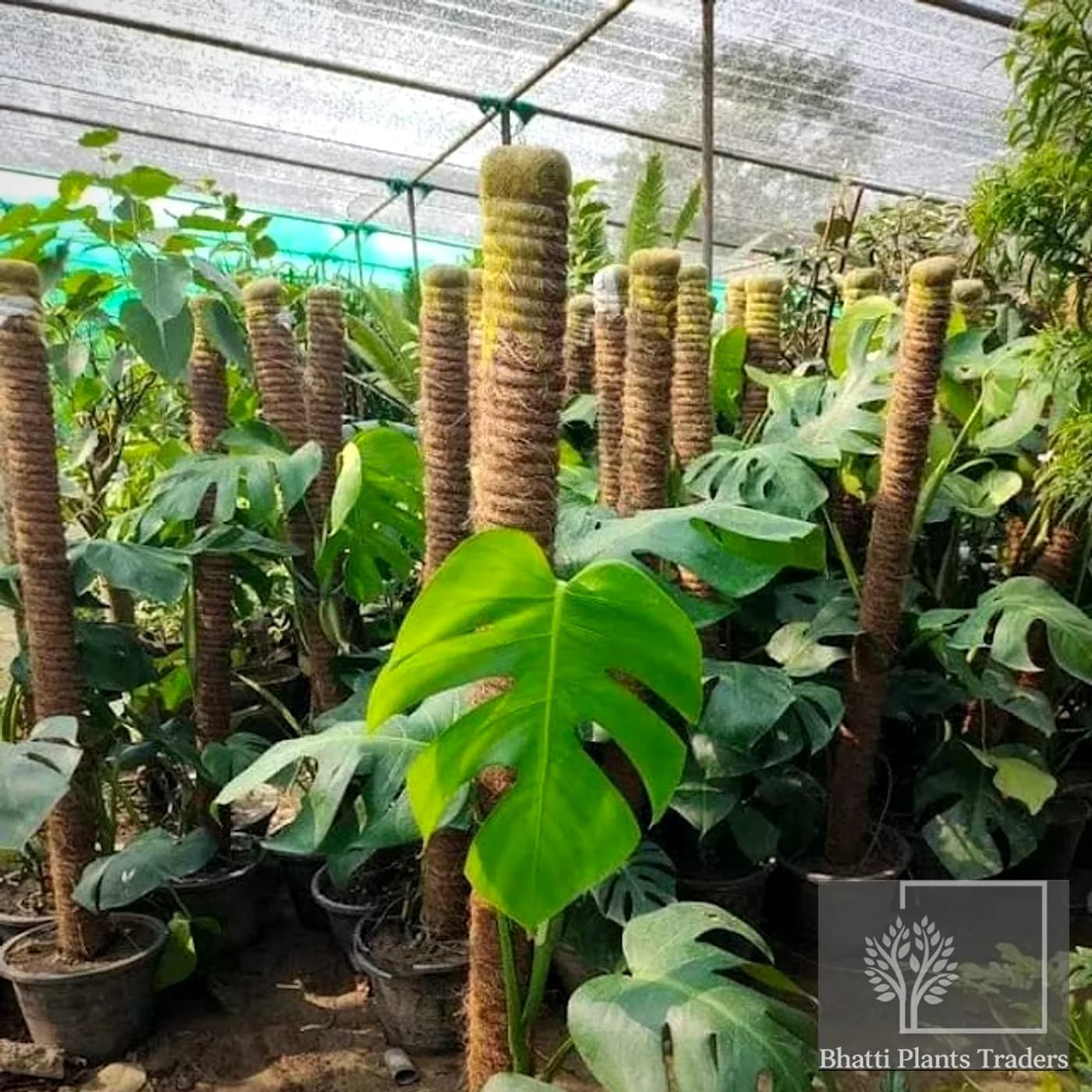
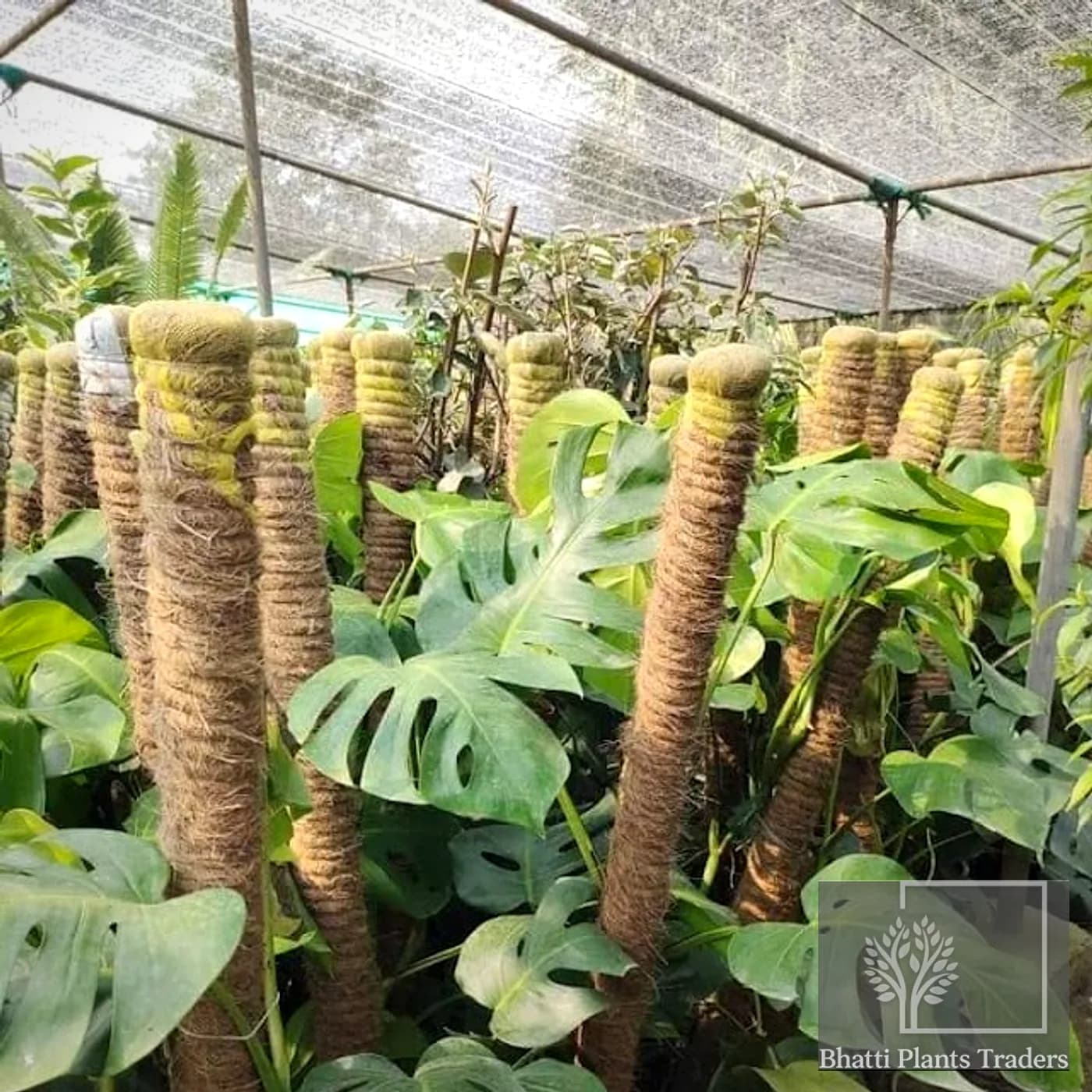
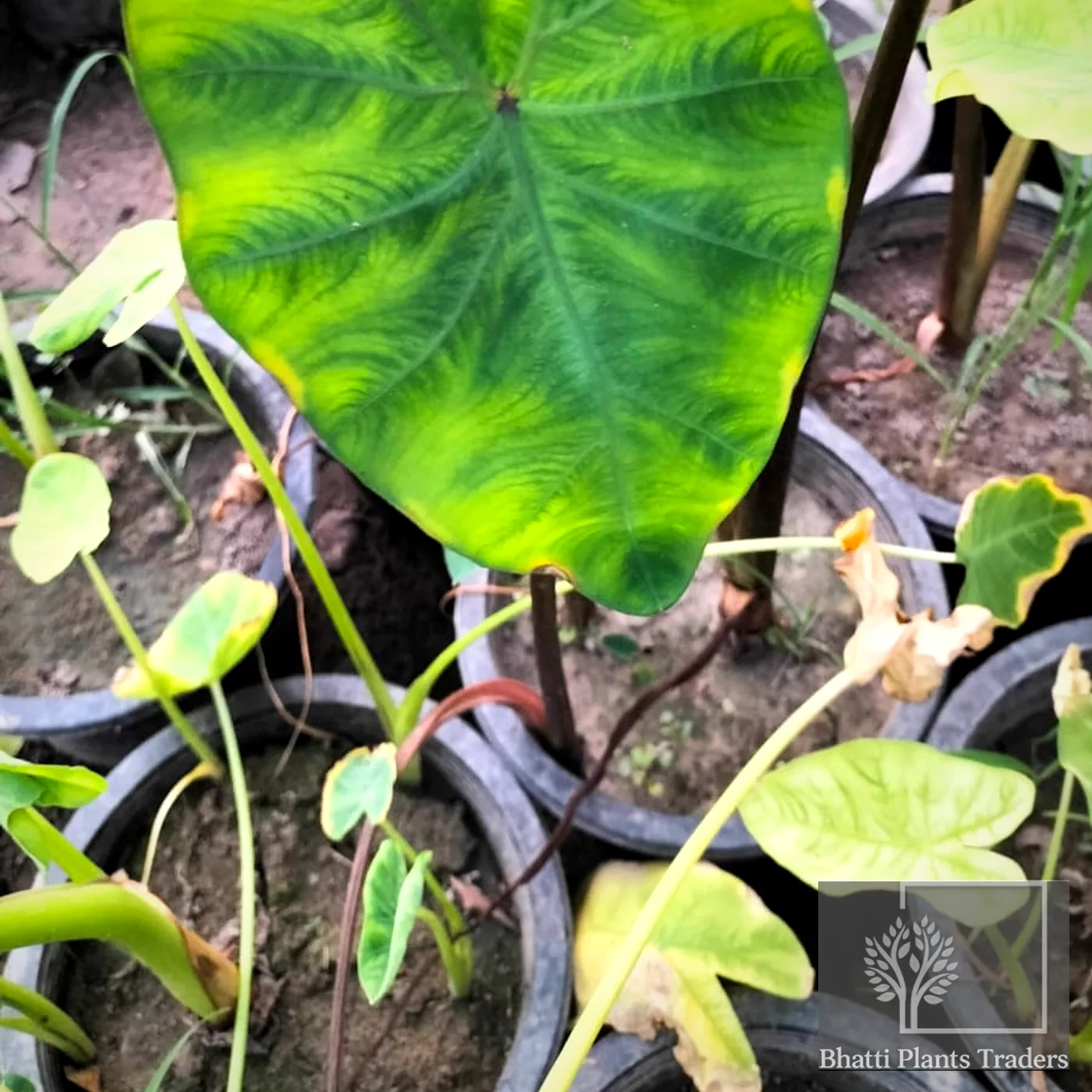
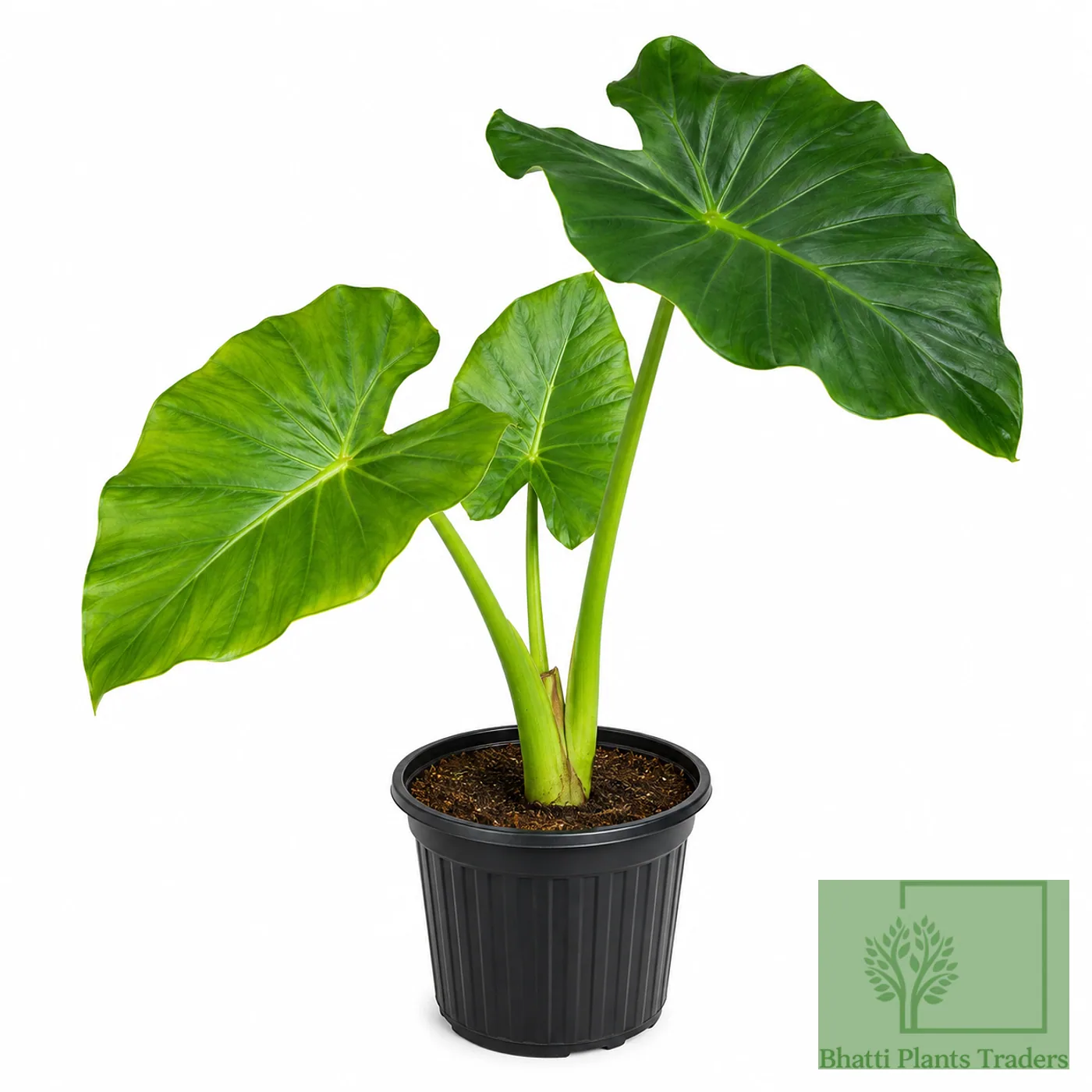
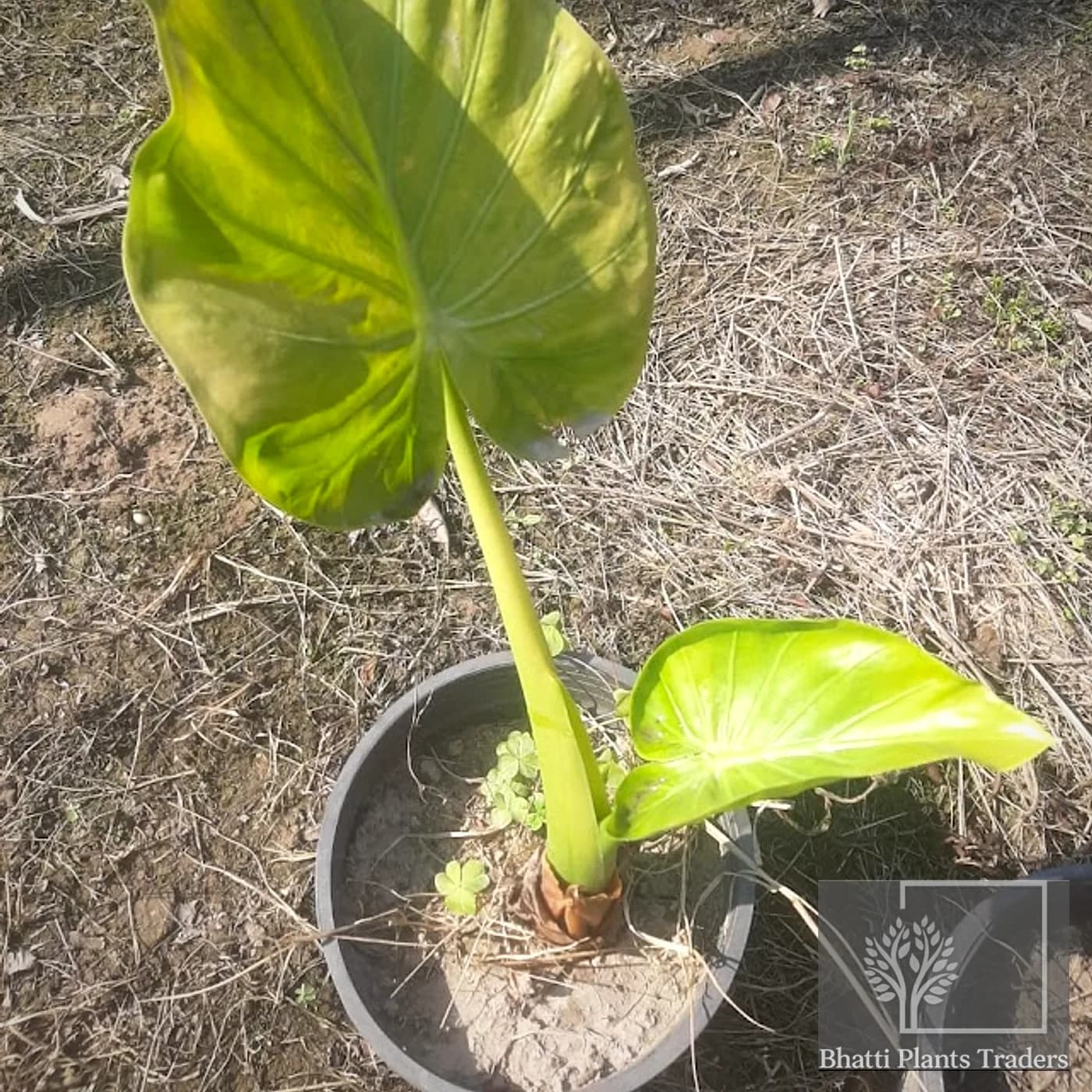
Photographs are of our actual stock, taken at the nursery. Plants are living things — expect small differences in shape and leaf count from the plant shown.
Indoor Plants
Alocasia
Alocasia spp.
Alocasia does not do subtle. The leaves are enormous, held almost vertically, with pale veining that stands out against dark green like circuitry. A single plant on the floor beside a sofa changes the whole room.
It is more demanding than the other aroids we sell, and we would rather say so. Alocasia wants humidity, warmth and consistently damp — not wet — soil. It also goes dormant in a cold winter, dropping leaves down to the corm. That is not death; keep it barely moist and it returns in March with more leaves than before.
- Statement foliage — the leaves are the whole point
- Grown outdoors here under shade cloth, so it is already hardened
- Winter dormancy is normal — it comes back stronger
Rs 2,600for the 12 inch pot
Inclusive of pot and mix. Delivery Rs 350, free over Rs 5,000.
1
4.6(47 reviews) In stock, dispatched in 1–2 working days
Packed by hand
Dispatched in 1–2 working days
7-day guarantee
Replaced or refunded if damaged
Grown by us
Never bought in and resold
At a glance
- Mature size
- 60 cm – 1.2 m depending on species
- Growth rate
- Fast in warmth and humidity, dormant below 15°C
- Difficulty
- Moderate to keep
- Around pets
- Keep away from cats, dogs and small children
Bright indirect lightFloor plantHumid room
How to look after your Alocasia
Written for Pakistani conditions — long hot summers, dry winter air, and hard tap water. Follow this rather than advice written for a temperate climate.
- Light
- Bright, filtered light. A metre back from an east or north window is ideal. Direct summer sun through glass will scorch the leaves within days.
- Water
- Water when the top 3–4 cm of mix is dry — roughly weekly in summer, every 12–15 days in winter. Drench until it runs from the drainage hole, then let it drain fully.
- Humidity
- Prefers 50–60%. In dry Punjab winters, group plants together or stand the pot on a tray of wet pebbles. Misting alone does very little.
- Soil
- Chunky, airy aroid mix — bark, perlite and coco peat. Aroid roots need air as much as they need water; dense garden soil will rot them.
- Feeding
- Balanced liquid feed at half strength every 3 weeks from March to October. Do not feed in December and January.
- Temperature
- 18–30°C. Move away from a direct AC draught, and off cold tile floors below 12°C.
If something goes wrong
Yellow lower leaves
Why it happens: Overwatering — the most common cause by far.
What to do: Let the mix dry to 5 cm depth, then water less often. Check that the drainage hole is not blocked.
Brown, crispy leaf edges
Why it happens: Dry air or salt build-up from tap water.
What to do: Raise humidity, and flush the pot with a large volume of water once a month.
Small new leaves, long bare stem
Why it happens: Not enough light.
What to do: Move closer to a window. Aroids stretch toward light rather than complaining first.
You might also like
Rare
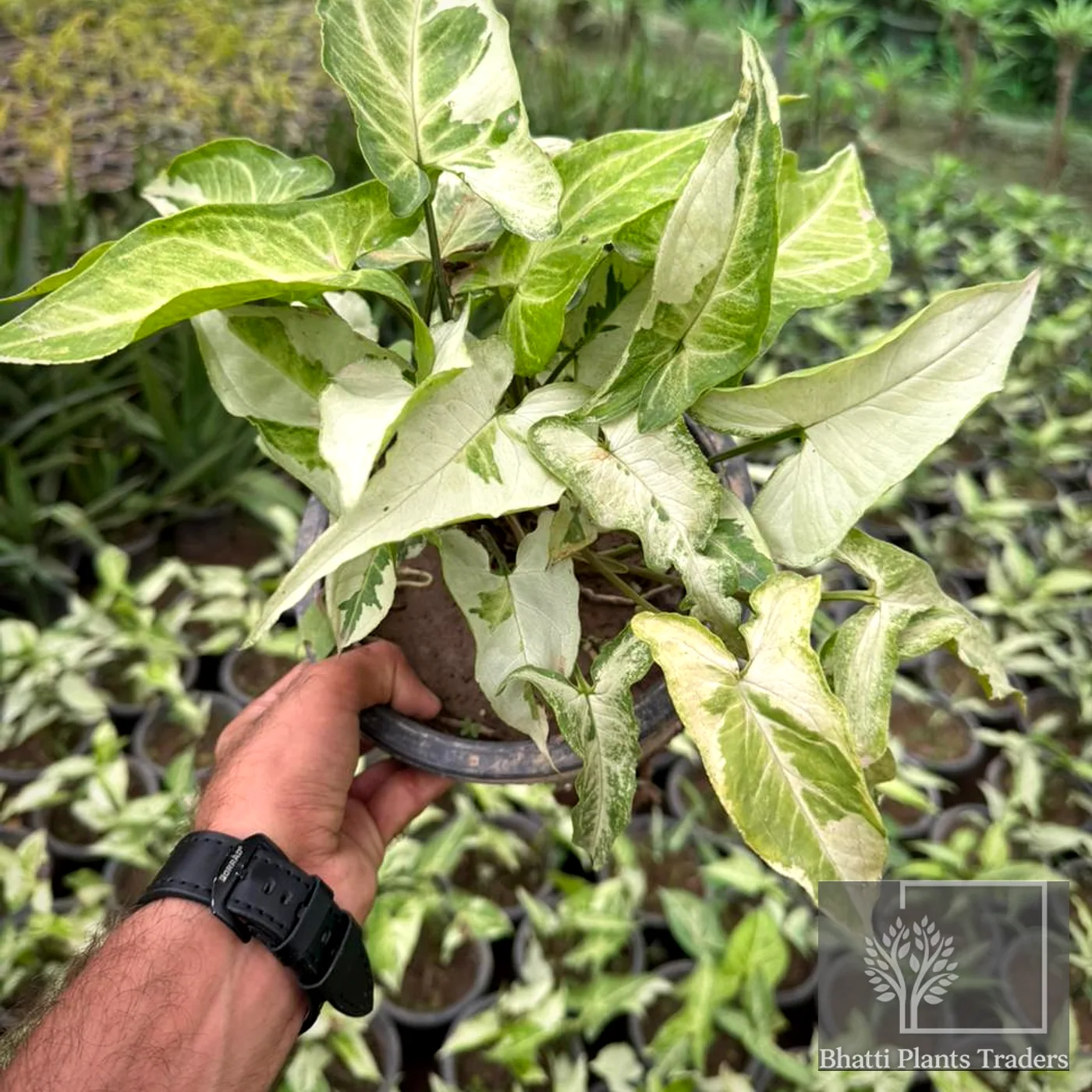
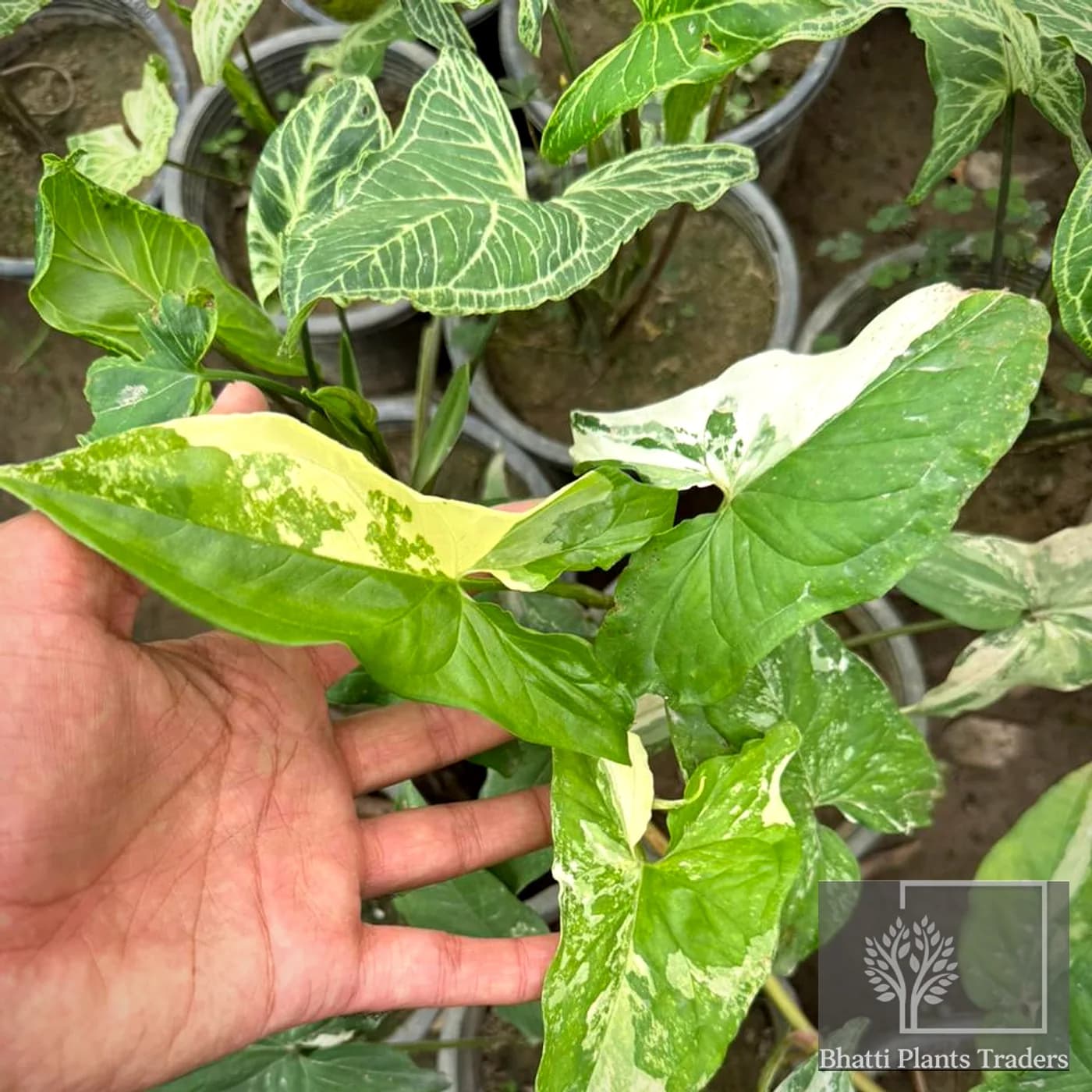
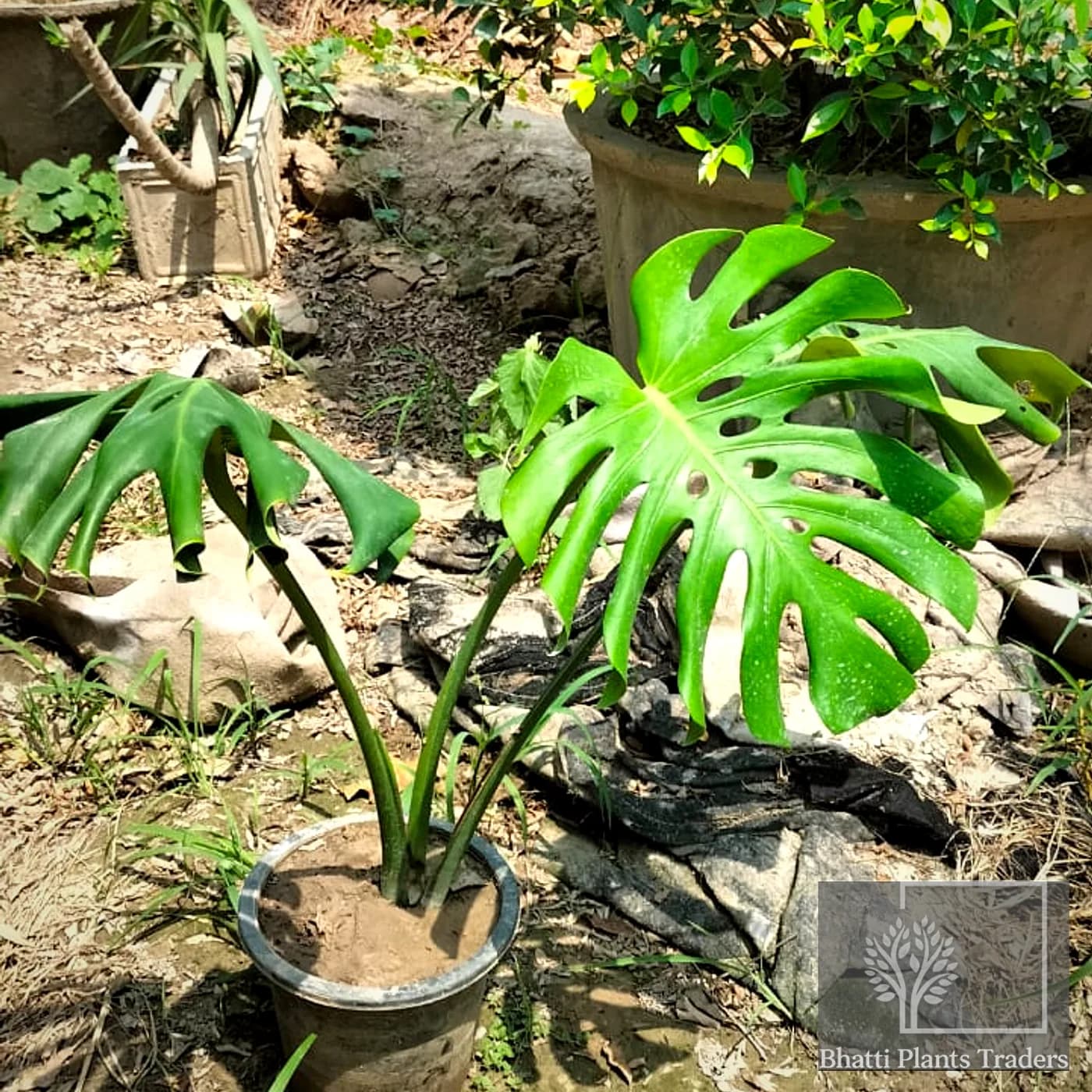
Snow-white sectoral variegation — a genuine collector aroid.
fromRs 8,000
Bestseller