Rare
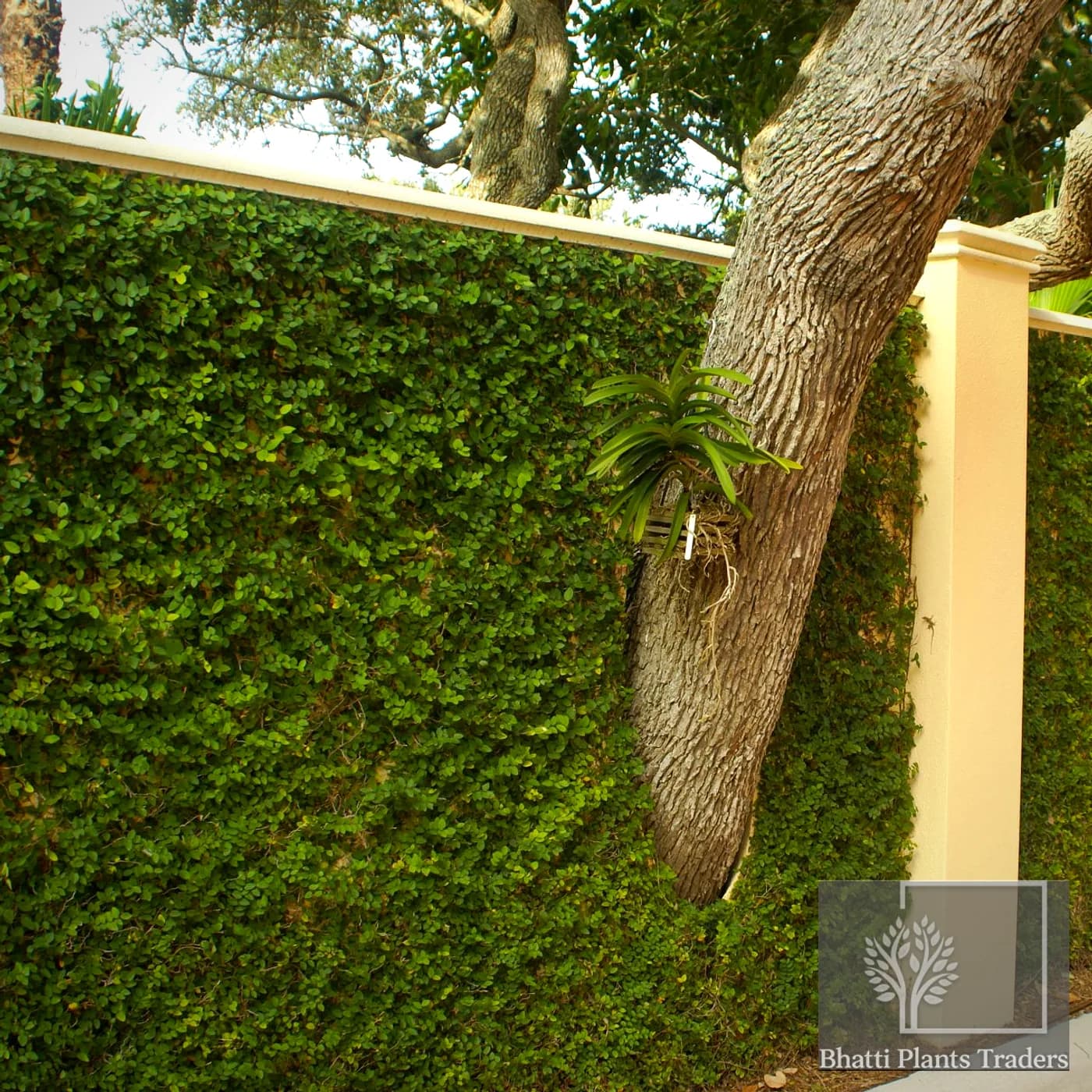
Photographs are of our actual stock, taken at the nursery. Plants are living things — expect small differences in shape and leaf count from the plant shown.
Vines & Creepers
Creeping Fig (Chipkali Vine)
Ficus pumila
Creeping fig does something no other climber quite manages: it lies absolutely flat against a wall, in a dense mat of small overlapping leaves, so the wall appears to have been resurfaced in green rather than covered by a plant. It self-clings to brick, plaster and concrete.
It takes two seasons to establish and then moves quickly. Trim the outward-growing mature shoots to keep the juvenile flat growth, which is the growth that gives the effect.
- Lies dead flat against masonry — resurfaces a wall in green
- Self-clinging on brick, plaster and concrete
- Trim outward shoots to keep the flat juvenile growth
Rs 750for the 12 inch pot
Inclusive of pot and mix. Delivery Rs 350, free over Rs 5,000.
1
4.7(47 reviews) In stock, dispatched in 1–2 working days
Packed by hand
Dispatched in 1–2 working days
7-day guarantee
Replaced or refunded if damaged
Grown by us
Never bought in and resold
At a glance
- Mature size
- Covers 5–10 m² per plant
- Growth rate
- Slow to establish, then fast
- Difficulty
- Easy to keep
- Around pets
- Keep away from cats, dogs and small children
Partial shadeFull sunWallBoundary
How to look after your Creeping Fig (Chipkali Vine)
Written for Pakistani conditions — long hot summers, dry winter air, and hard tap water. Follow this rather than advice written for a temperate climate.
- Light
- Full sun to partial shade depending on species — flowering vines want sun, foliage vines tolerate shade.
- Water
- Deeply twice a week while establishing, then weekly. Established vines are notably drought-tolerant.
- Humidity
- Ambient.
- Soil
- Well-draining garden soil. Add compost at planting.
- Feeding
- Balanced feed monthly through the growing season; switch to high-potassium before the flowering flush.
- Temperature
- 15–45°C.
If something goes wrong
Growing sideways instead of climbing
Why it happens: Nothing to grip.
What to do: Install wires, mesh or a trellis and tie in the leading shoots by hand until they take hold.
Flowering only at the very top
Why it happens: Bare, unpruned lower growth.
What to do: Prune after flowering to encourage branching low down.
You might also like
Bestseller