Photographs are of our actual stock, taken at the nursery. Plants are living things — expect small differences in shape and leaf count from the plant shown.
Indoor Plants
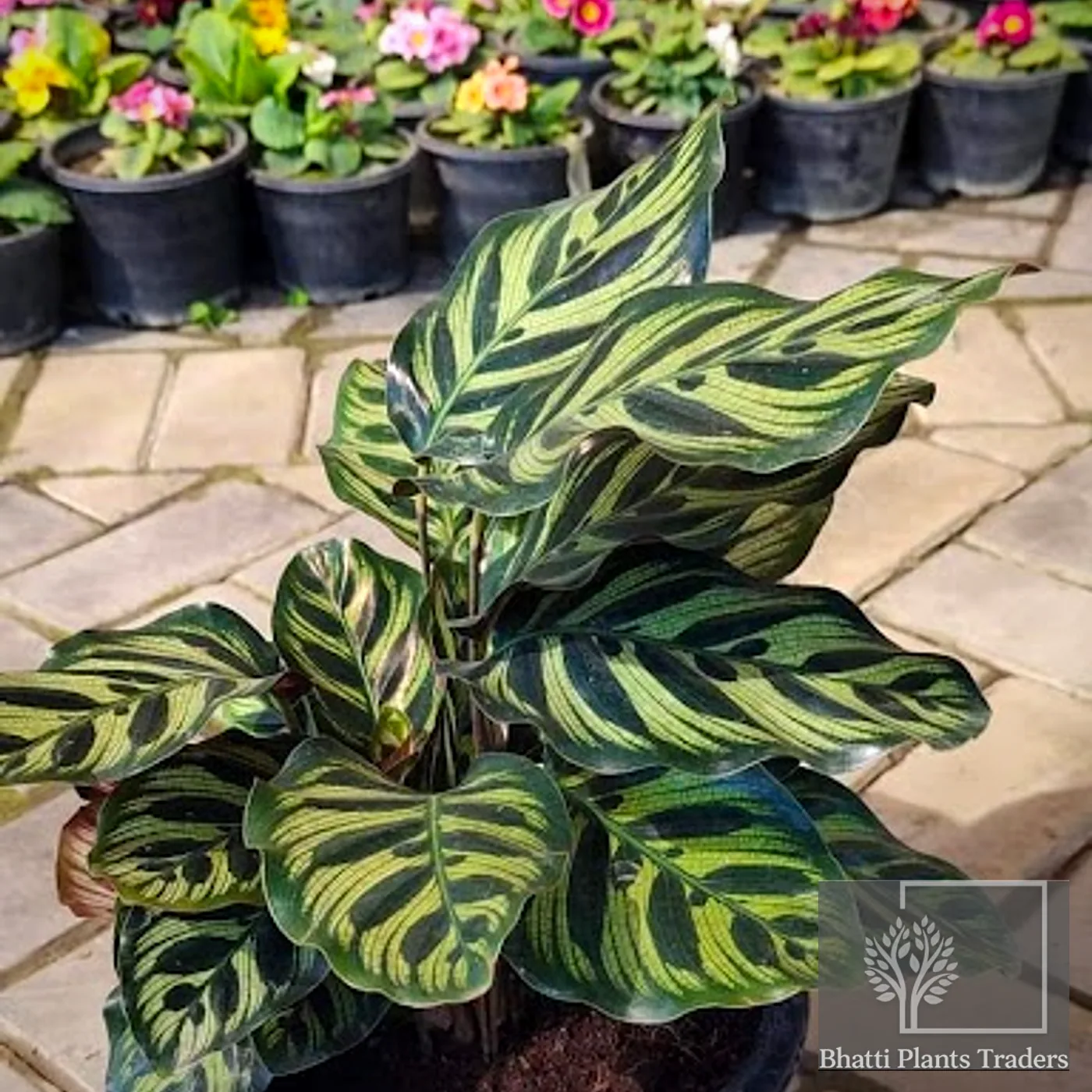
Calathea Peacock
Goeppertia makoyana
The peacock calathea has some of the finest leaf patterning of any houseplant — pale silver-green feathering laid over darker green, with the whole underside a deep burgundy that shows when the leaves fold upward at night. They genuinely move; you can hear the leaves shift in a quiet room.
We will be honest about this one: calatheas are the most demanding plants on this site. They want high humidity and filtered water, and they show every mistake as a brown edge. If you can give them a humid bathroom or a spot beside a humidifier, they are extraordinary. If you cannot, buy an aglaonema instead.
- Leaves fold up at night and open at dawn — visibly, audibly
- Deep burgundy undersides against silver-feathered tops
- Needs high humidity and filtered water — not a beginner plant
Rs 2,250for the 12 inch pot
Inclusive of pot and mix. Delivery Rs 350, free over Rs 5,000.
1
4.4(38 reviews) In stock, dispatched in 1–2 working days
Packed by hand
Dispatched in 1–2 working days
7-day guarantee
Replaced or refunded if damaged
Grown by us
Never bought in and resold
At a glance
- Mature size
- 40–60 cm
- Growth rate
- Moderate
- Difficulty
- Expert to keep
- Around pets
- Non-toxic — safe if chewed
Medium lightBathroomHumid roomAir purifying
How to look after your Calathea Peacock
Written for Pakistani conditions — long hot summers, dry winter air, and hard tap water. Follow this rather than advice written for a temperate climate.
- Light
- Medium, filtered light. These grow on a forest floor — strong light bleaches the patterning permanently.
- Water
- Keep lightly and consistently moist. Use filtered, rain or boiled-and-cooled water; calatheas are genuinely sensitive to the salts in hard tap water.
- Humidity
- High, 60%+. This is the single factor that decides whether a calathea thrives or limps along.
- Soil
- Fine, moisture-retentive but airy mix.
- Feeding
- Quarter-strength balanced feed monthly in the growing season. They burn easily.
- Temperature
- 18–29°C. No cold draughts, no AC blowing directly on the leaves.
If something goes wrong
Crisp brown leaf margins
Why it happens: Low humidity or hard water.
What to do: Switch to filtered water and raise humidity. Existing damage will not reverse; new leaves come in clean.
Leaves curling inward through the day
Why it happens: Thirst or heat stress.
What to do: Check the mix. If damp, the plant is too hot or in too much light — move it.
Fading pattern
Why it happens: Too much light.
What to do: Move further from the window.
You might also like
New arrival
Staff pick