Rare
 Staff pick
Photographs are of our actual stock, taken at the nursery. Plants are living things — expect small differences in shape and leaf count from the plant shown.
Fruit Plants
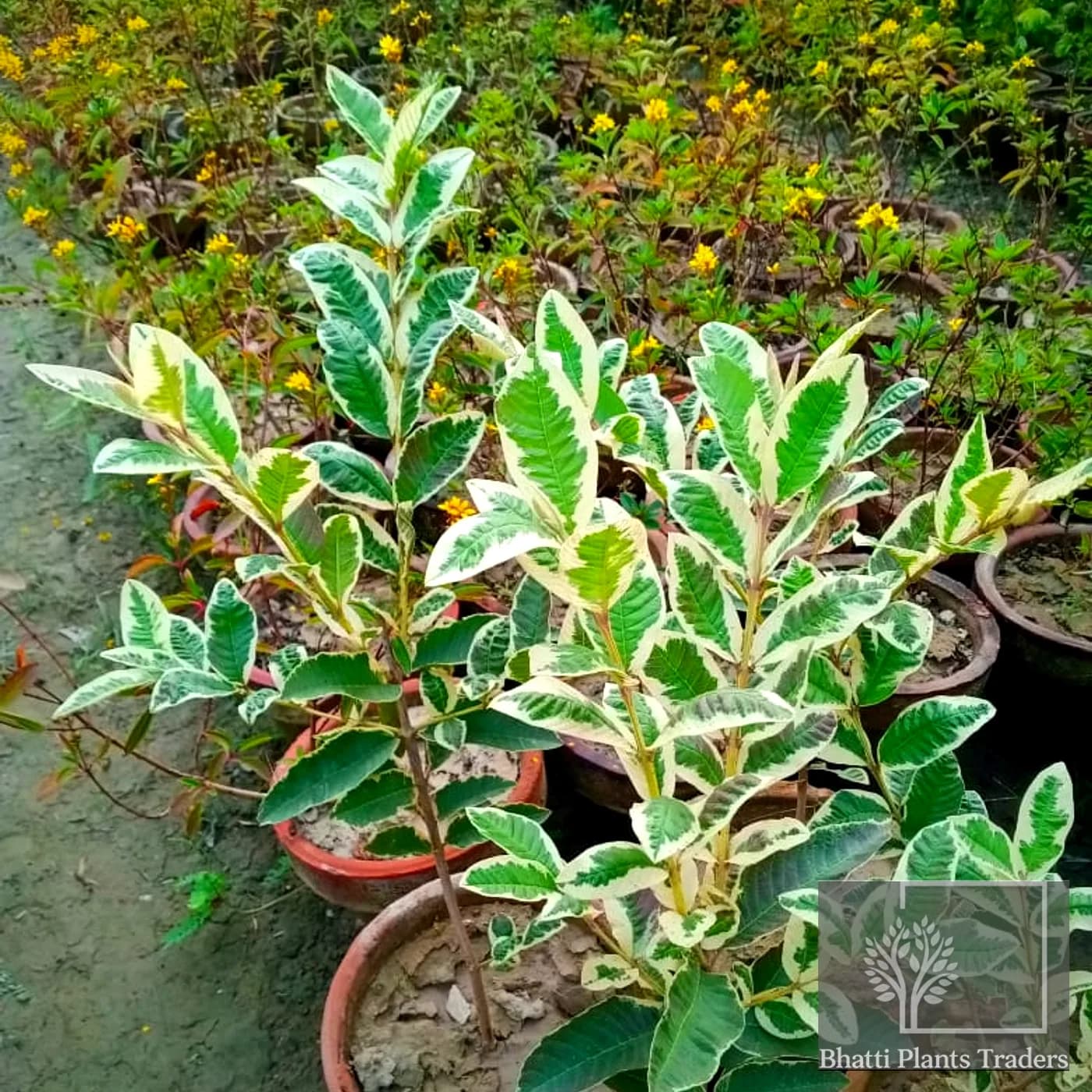
Variegated Guava
Psidium guajava ‘Variegata’
A guava that is worth planting for the foliage alone. The leaves are marbled cream and pale green, and new growth flushes pink before hardening — but it still crops the same sweet white-fleshed amrood as an ordinary tree.
It is slower and smaller than a standard guava because of the reduced chlorophyll, which is actually an advantage in a small garden. It fruits from the third year and stays manageable in a large pot.
- Ornamental cream-marbled foliage with pink new growth
- Crops normal sweet white-fleshed guava
- Slower and smaller than standard guava — suits small gardens
Rs 3,350for the 2 ft, 24 inch pot
Inclusive of pot and mix. Delivery Rs 350, free over Rs 5,000.
1
4.8(27 reviews) In stock, dispatched in 1–2 working days
Packed by hand
Dispatched in 1–2 working days
7-day guarantee
Replaced or refunded if damaged
Grown by us
Never bought in and resold
At a glance
- Mature size
- 2–4 m
- Growth rate
- Moderate
- Difficulty
- Easy to keep
- Around pets
- Non-toxic — safe if chewed
Full sunGardenTerraceLarge pot
How to look after your Variegated Guava
Written for Pakistani conditions — long hot summers, dry winter air, and hard tap water. Follow this rather than advice written for a temperate climate.
- Light
- Full sun. Six to eight hours minimum for a worthwhile crop.
- Water
- Deeply and regularly, especially while fruit is setting and swelling. Mulch heavily to hold soil moisture.
- Humidity
- Ambient.
- Soil
- Deep, fertile, well-draining soil. Avoid heavy waterlogged clay — raise the bed if that is what you have.
- Feeding
- Balanced feed in early spring, high-potassium once fruit sets, and well-rotted manure each winter.
- Temperature
- Species dependent; most listed here suit the Pakistani plains. Young grafted stock needs shade in its first summer.
If something goes wrong
Flowers form but fruit does not set
Why it happens: Poor pollination or heat stress at flowering.
What to do: Plant a second variety nearby where cross-pollination is needed, and shade the tree during extreme heat.
Fruit dropping while small
Why it happens: Water stress or a natural thinning.
What to do: Keep watering even and mulch the root zone. A degree of natural drop is normal and healthy.
Suckers below the graft union
Why it happens: Rootstock growth.
What to do: Remove them flush at the trunk as soon as they appear, or they will outgrow the grafted variety.
You might also like
Rare