
Bestseller
 Bestseller
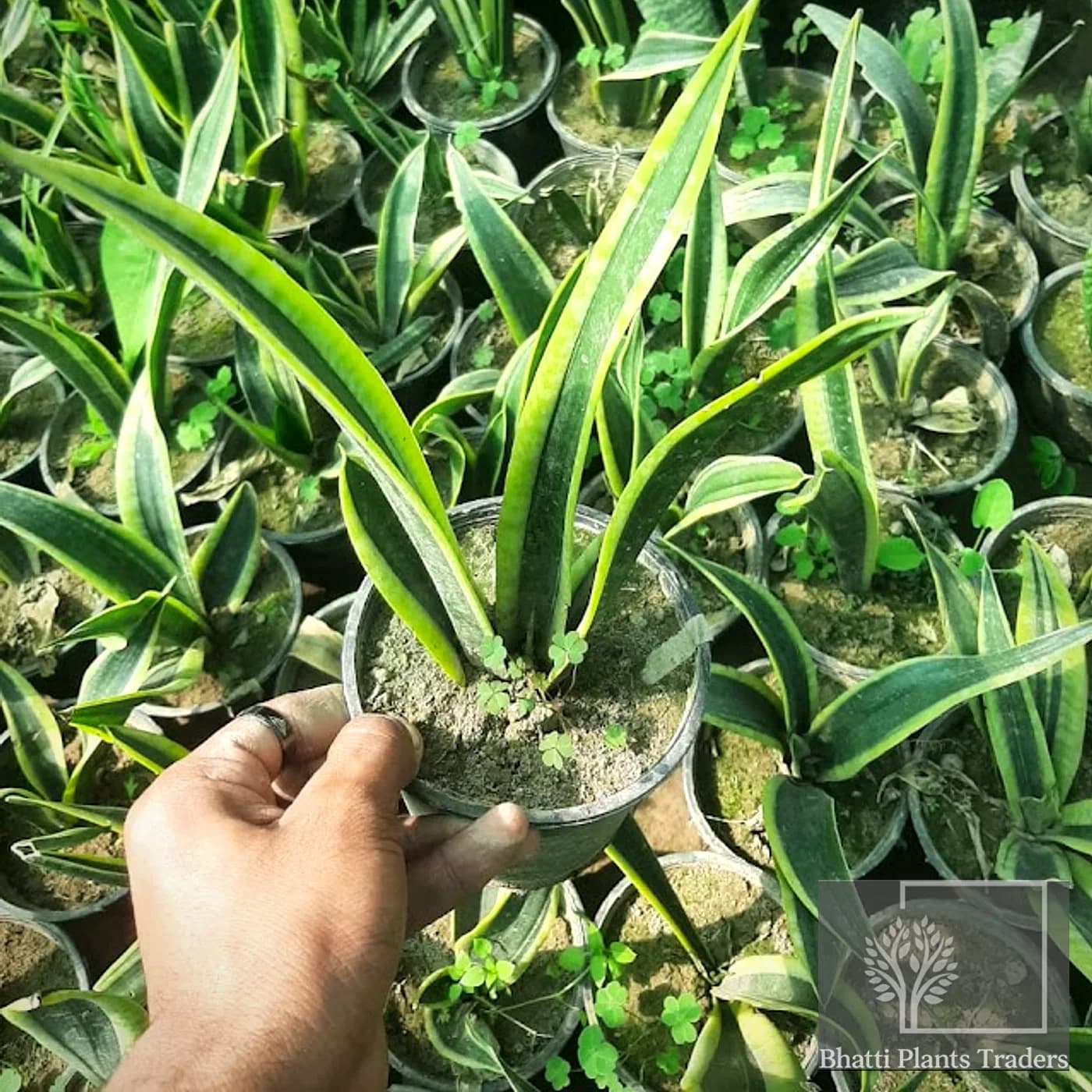
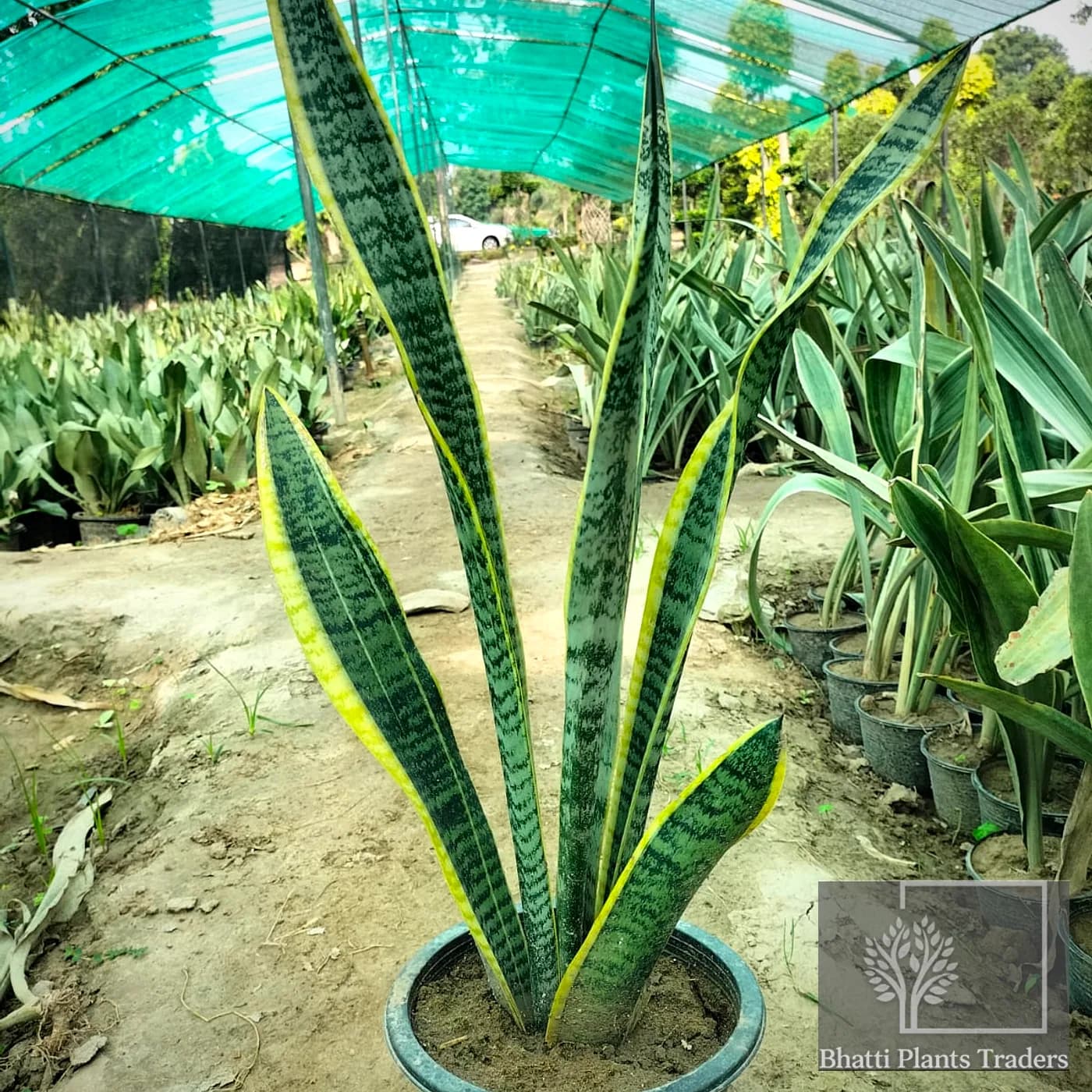
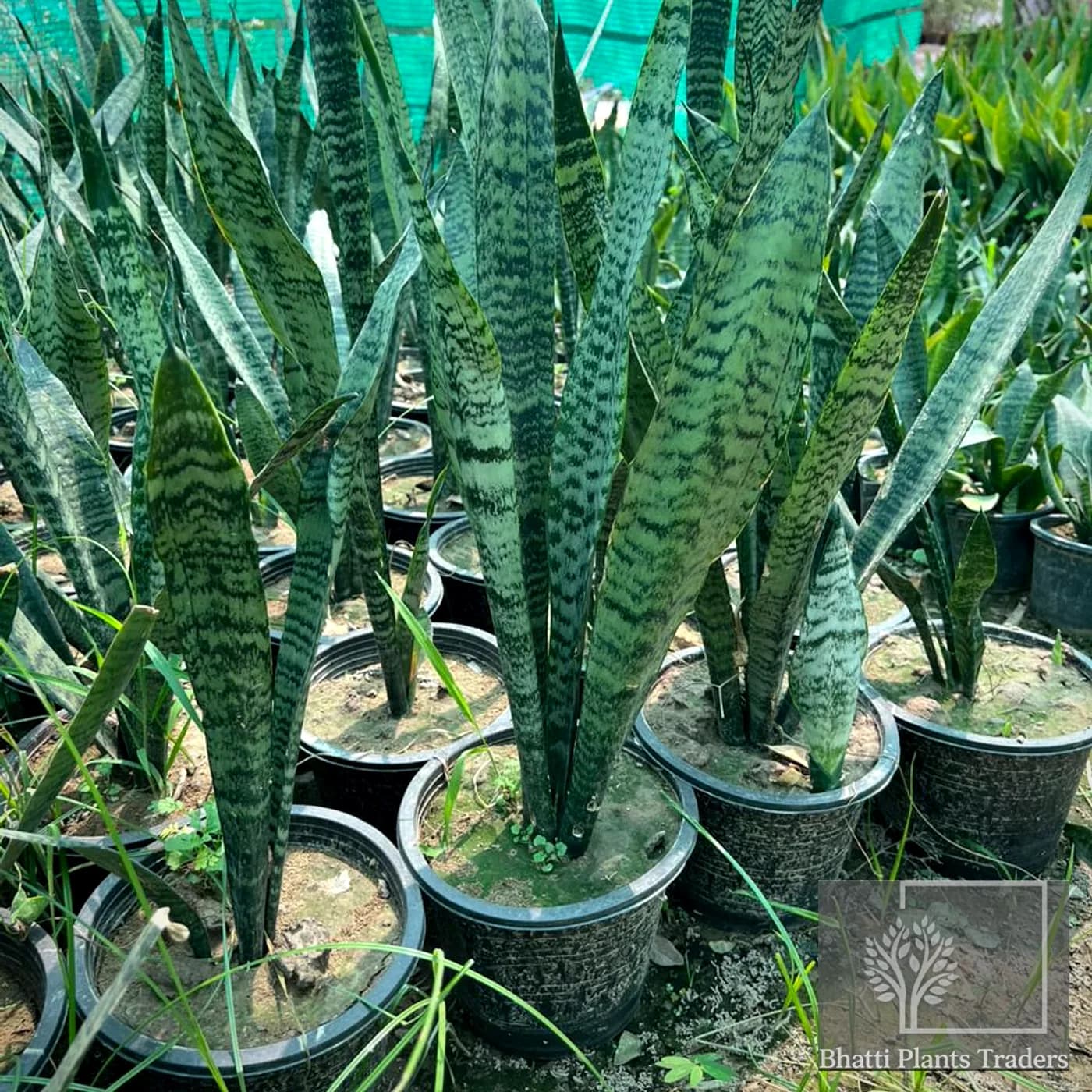
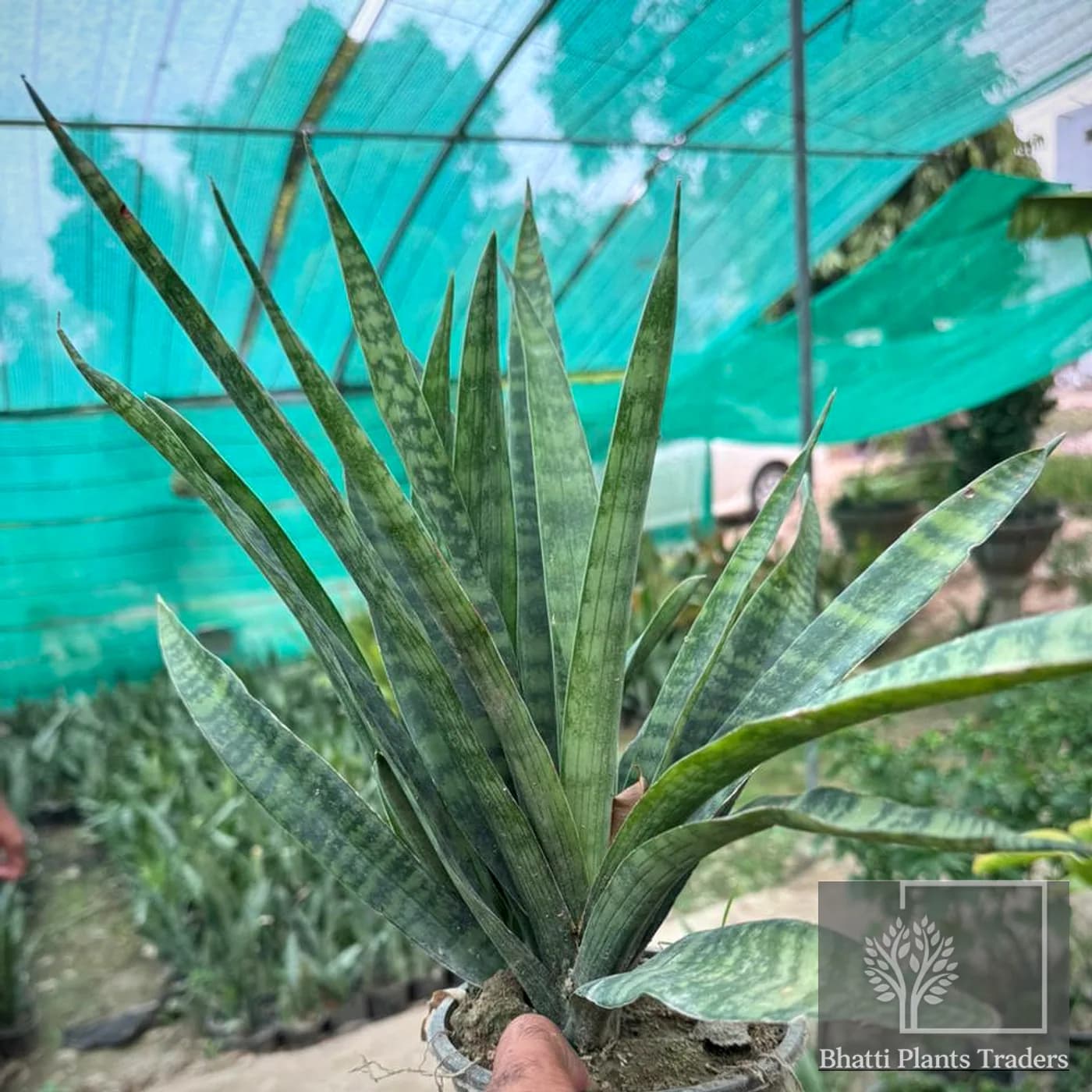
Photographs are of our actual stock, taken at the nursery. Plants are living things — expect small differences in shape and leaf count from the plant shown.
Indoor Plants
Snake Plant Laurentii
Dracaena trifasciata ‘Laurentii’
Laurentii is the snake plant most people picture: tall, stiff, upright blades in dark green cross-banding, each one edged with a broad band of bright yellow. It is the most-grown sansevieria in the world and still one of the best.
The yellow margin is the thing to protect. It comes from the growing point, not the leaf tissue, which means leaf cuttings revert to plain green — Laurentii can only be propagated by dividing the rhizome. That is why a large clump costs what it does.
- Broad bright yellow margins on dark banded blades
- Divided from mother clumps — leaf cuttings lose the yellow entirely
- Handles low light, dry air and a forgotten month of watering
Rs 1,700for the 12 inch pot
Inclusive of pot and mix. Delivery Rs 350, free over Rs 5,000.
1
4.9(118 reviews) In stock, dispatched in 1–2 working days
Packed by hand
Dispatched in 1–2 working days
7-day guarantee
Replaced or refunded if damaged
Grown by us
Never bought in and resold
At a glance
- Mature size
- 70–100 cm
- Growth rate
- Slow
- Difficulty
- Easy to keep
- Around pets
- Keep away from cats, dogs and small children
Low lightBright indirect lightBedroomOfficeFloor plantAir purifying
How to look after your Snake Plant Laurentii
Written for Pakistani conditions — long hot summers, dry winter air, and hard tap water. Follow this rather than advice written for a temperate climate.
- Light
- Extremely adaptable — from a shaded corridor to full morning sun. Variegation stays sharpest in bright indirect light; deep shade will fade it.
- Water
- Every 2–3 weeks in summer, once a month or less in winter. Wait until the leaves feel slightly less rigid. This plant dies of kindness far more often than neglect.
- Humidity
- No special requirement. Handles dry indoor air without complaint.
- Soil
- Fast-draining cactus mix. Never a moisture-retentive potting soil.
- Feeding
- A dilute feed twice a year is plenty. Over-feeding produces floppy, weak leaves.
- Temperature
- 15–35°C. Protect from frost; below 10°C the leaves develop soft, translucent patches.
If something goes wrong
Soft, mushy base
Why it happens: Root rot from overwatering.
What to do: Unpot immediately, cut away every soft section, let the cuts dry for two days, repot in dry cactus mix.
Wrinkled, curling leaves
Why it happens: Underwatered — genuinely dry, not just thirsty.
What to do: Soak thoroughly and resume a normal cycle. Leaves plump within a week.
Variegation reverting to plain green
Why it happens: Insufficient light.
What to do: Move to a brighter spot. Remove any fully green pups so they do not outcompete the variegated growth.
Dracaena, formerly Sansevieria
We grow 14 snake plants
They differ in leaf shape, mature size and colour — compare them side by side before you choose.
Staff pick
You might also like
Bestseller
Bestseller