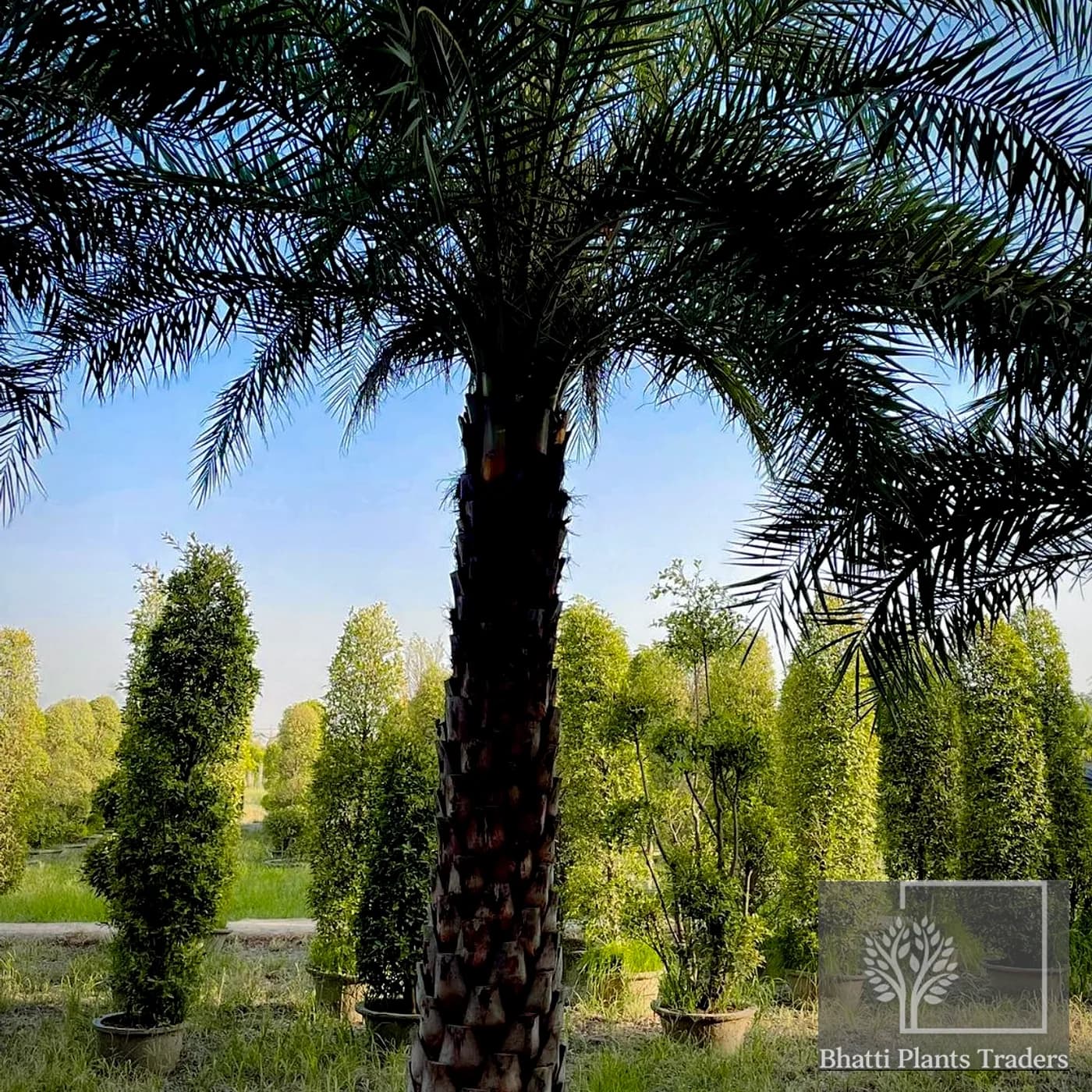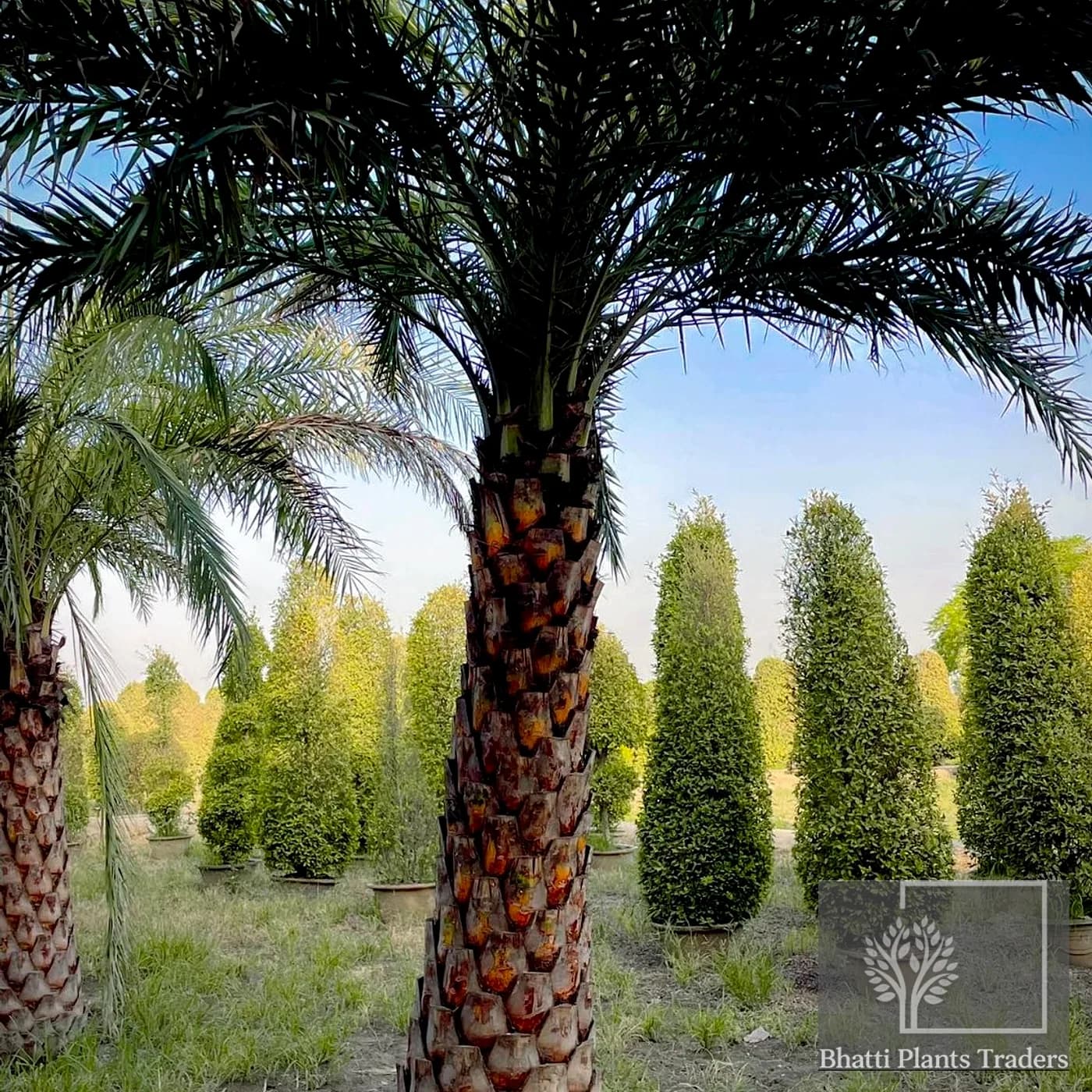
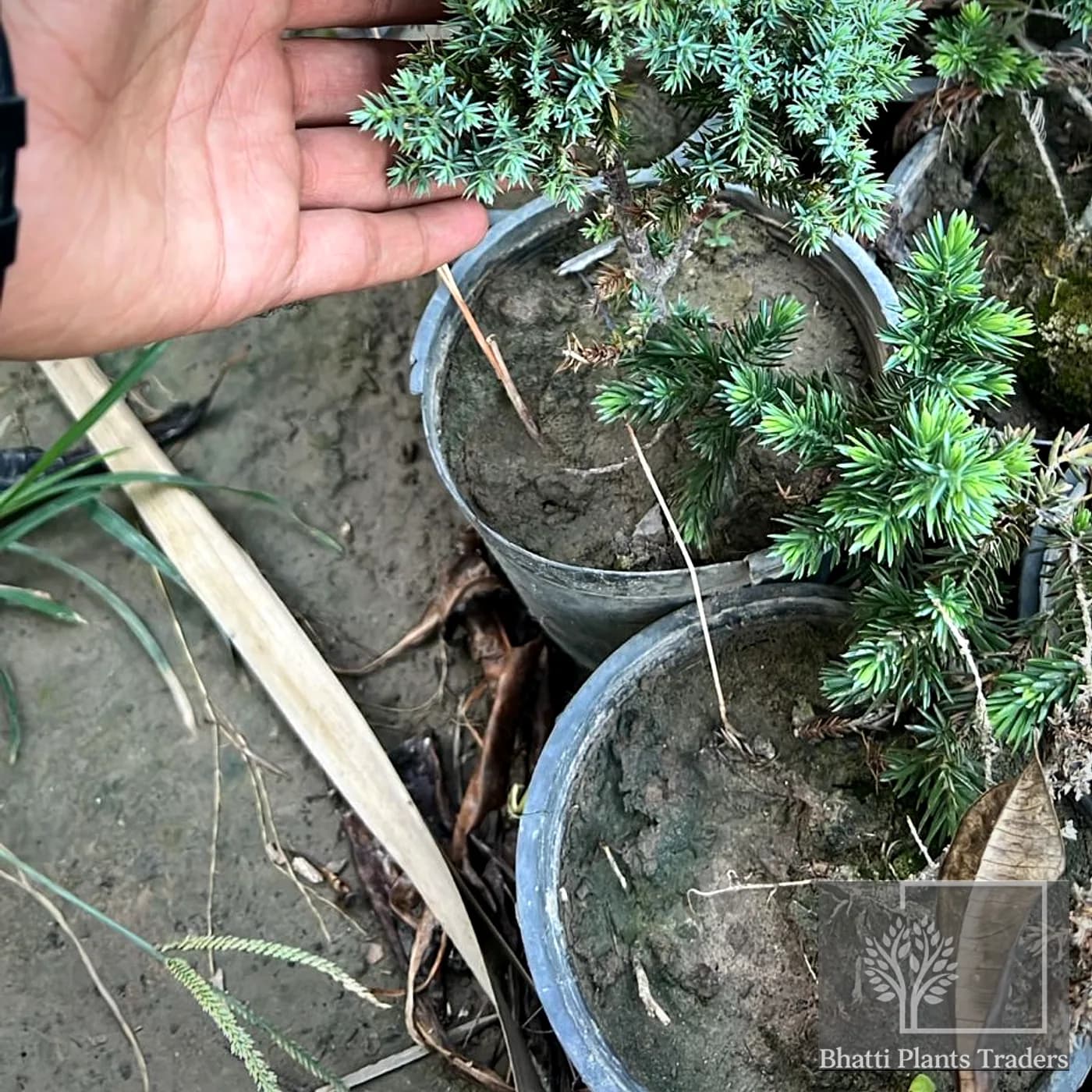
Photographs are of our actual stock, taken at the nursery. Plants are living things — expect small differences in shape and leaf count from the plant shown.
Palms & Trees
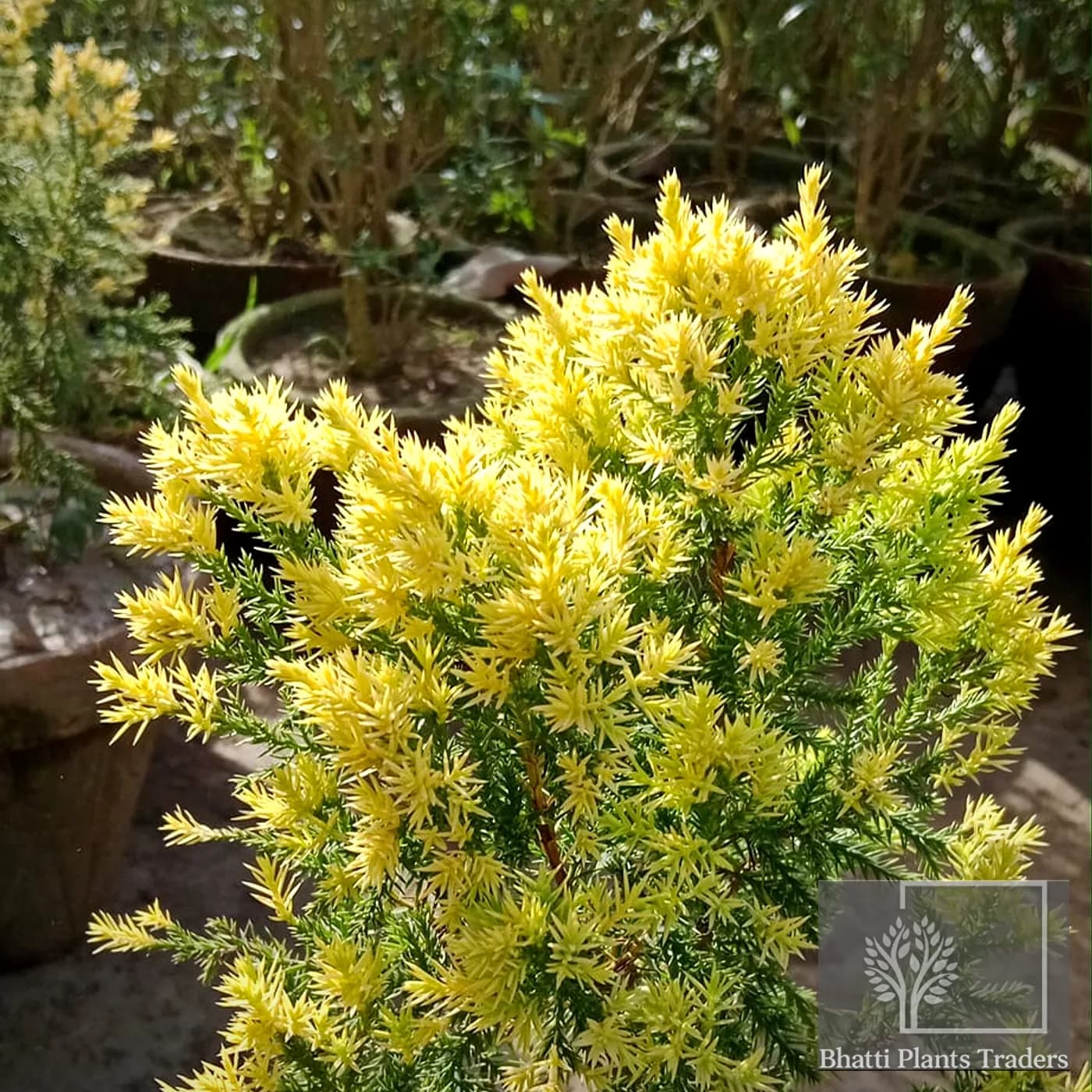
Silver Juniper
Juniperus squamata ‘Blue Star’
A low, dense, spreading juniper in a distinct steel-blue that reads as silver in strong light. It stays under a metre and spreads sideways, which makes it useful for the front of a border, for rockeries and gravel gardens, and for tumbling over a low wall.
It needs sun and sharp drainage — the one thing that will kill it is heavy wet soil in winter. On a slope or in a raised bed it is effectively permanent.
- Distinct steel-blue foliage that reads silver in sun
- Low spreading habit — front of border, rockery, or over a wall
- Needs sharp drainage; wet winter soil is the only real risk
Rs 2,700for the 18 inch pot
Inclusive of pot and mix. Delivery Rs 350, free over Rs 5,000.
1
4.7(26 reviews) In stock, dispatched in 1–2 working days
Packed by hand
Dispatched in 1–2 working days
7-day guarantee
Replaced or refunded if damaged
Grown by us
Never bought in and resold
At a glance
- Mature size
- 0.5–1 m tall, 1.5 m spread
- Growth rate
- Slow
- Difficulty
- Easy to keep
- Around pets
- Keep away from cats, dogs and small children
Full sunRockeryGravel gardenBorder
How to look after your Silver Juniper
Written for Pakistani conditions — long hot summers, dry winter air, and hard tap water. Follow this rather than advice written for a temperate climate.
- Light
- Full sun. Junipers lose their dense habit and go sparse in shade.
- Water
- Deeply but infrequently once established. Junipers are drought-tolerant and hate wet feet.
- Humidity
- Ambient. Good airflow prevents fungal problems.
- Soil
- Well-draining, even poor or sandy soil. Never heavy waterlogged clay.
- Feeding
- A slow-release feed once in spring is sufficient.
- Temperature
- -5–45°C. Genuinely hardy in every Pakistani climate zone.
If something goes wrong
Interior browning
Why it happens: Normal shedding of shaded old growth.
What to do: Brush out the dead material by hand to improve airflow.
Whole branches going brown and dying back
Why it happens: Root rot from overwatering, or spider mite.
What to do: Check drainage first. Then check leaf undersides for fine webbing and treat with neem oil.
You might also like
Collector
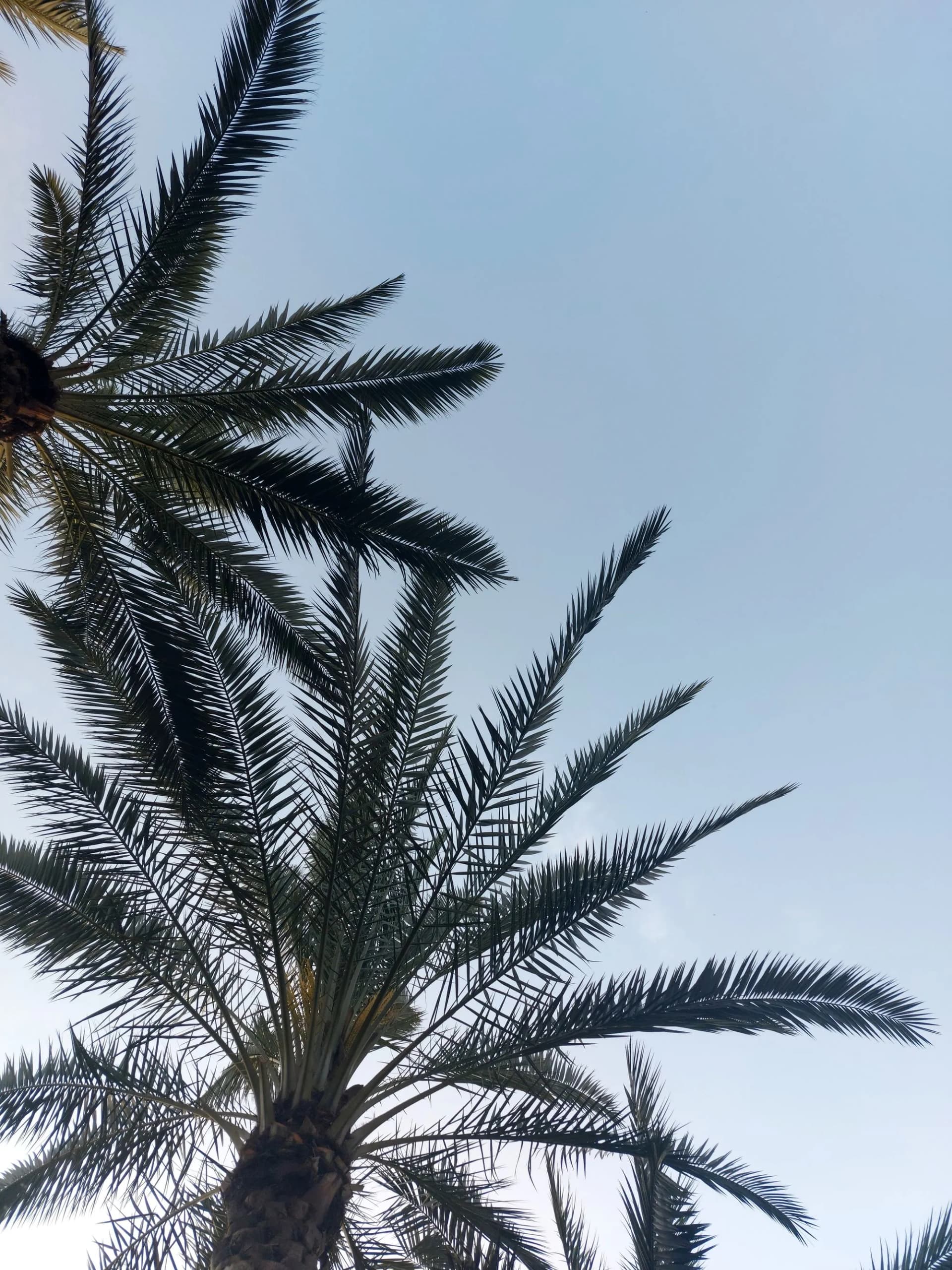

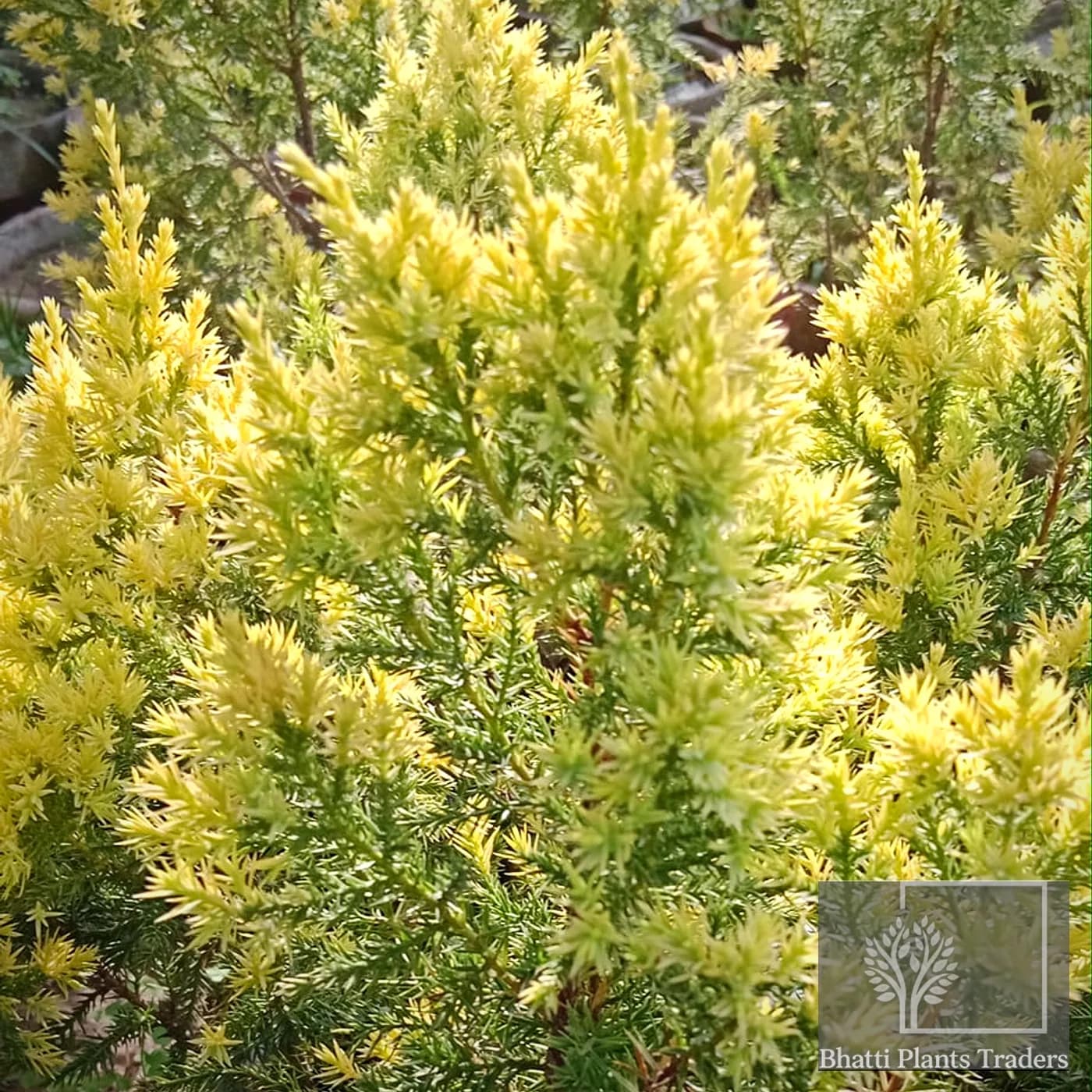
A massive pineapple-trunked crown — the grandest palm we grow.
fromRs 9,000
Staff pick

Bestseller