 BestsellerIllustration
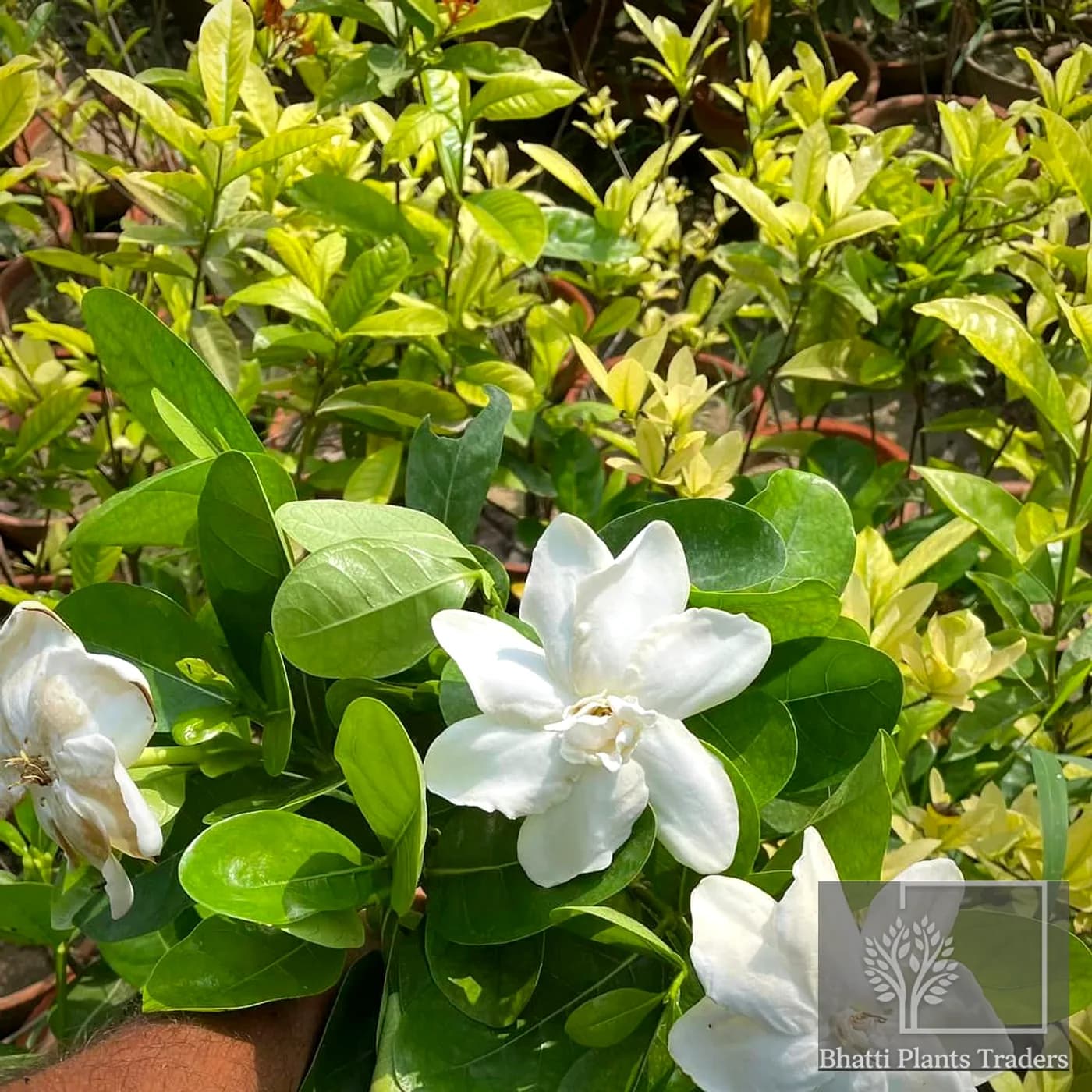
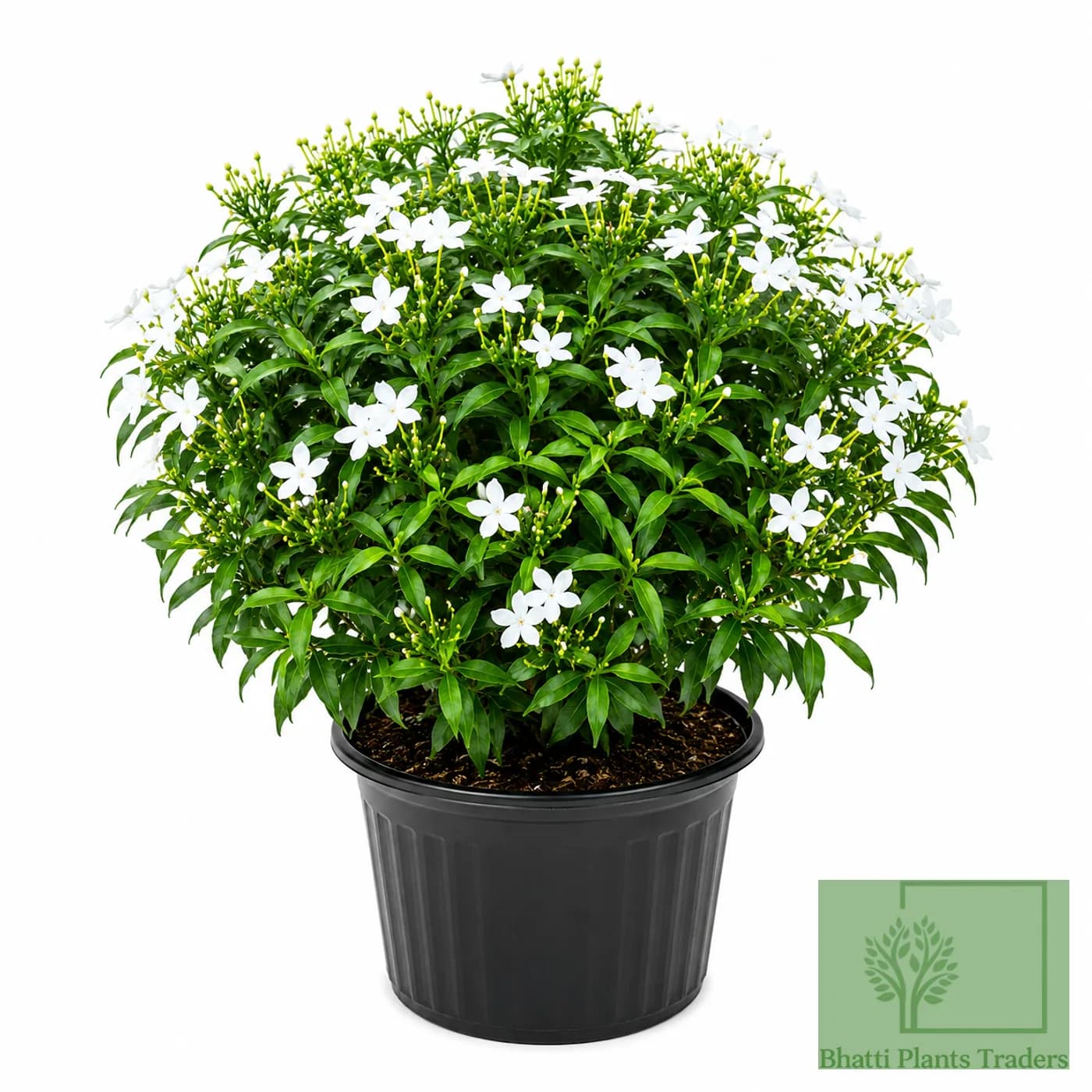
The first image is a studio illustration showing the plant and pot shape. The other 2 photographs are of our own stock at the nursery — those are what the plant actually looks like on the bench.
Flowering Plants
Chandni (Crape Jasmine)
Tabernaemontana divaricata
Chandni is probably the most planted flowering shrub in Pakistan, and it earns the position. Glossy dark leaves in dense opposite pairs, and from March until the cold sets in, a steady succession of pure white pinwheel flowers held just clear of the foliage. The single form is the one people know; the double is fuller and slightly slower.
What makes it a staple is how little it asks. It takes full Punjab sun or half a day of shade, tolerates our alkaline water, comes back hard from a winter cut, and clips into a hedge as readily as it grows into a loose informal bush. We keep it as a hedge row at the nursery for exactly that reason.
The scent is light in the day and much stronger after dark, which is when a courtyard planting earns its place. Plant it near a doorway or under a window rather than out in the middle of a lawn.
- Flowers from March to the first cold — the longest season we grow
- Takes full sun, alkaline water and a hard winter cut
- Clips into a hedge or grows as a loose informal bush
- Scent strengthens after dark — plant it near a door or window
Rs 500for the 10 inch pot
Inclusive of pot and mix. Delivery Rs 350, free over Rs 5,000.
1
4.8(71 reviews) In stock, dispatched in 1–2 working days
Packed by hand
Dispatched in 1–2 working days
7-day guarantee
Replaced or refunded if damaged
Grown by us
Never bought in and resold
At a glance
- Mature size
- 1.5–2 m, kept lower by clipping
- Growth rate
- Fast
- Difficulty
- Easy to keep
- Around pets
- Keep away from cats, dogs and small children
Full sunPartial shadeHedgeCourtyard
How to look after your Chandni (Crape Jasmine)
Written for Pakistani conditions — long hot summers, dry winter air, and hard tap water. Follow this rather than advice written for a temperate climate.
- Light
- Full sun for the heaviest flowering — six hours or more. In partial shade you get foliage and few blooms.
- Water
- Water deeply two or three times a week through summer and let the top inch dry between. It wilts visibly when thirsty and recovers within the hour, so it forgives a missed day.
- Humidity
- Ambient outdoor humidity is fine.
- Soil
- Not fussy. Ordinary garden soil with compost dug through is enough; it handles our alkaline soils without chlorosis.
- Feeding
- High-phosphorus feed every 3 weeks through the flowering season to keep buds coming.
- Temperature
- 15–45°C. Most are heat-loving; protect from frost.
If something goes wrong
Healthy leaves but no flowers
Why it happens: Too little sun, or a nitrogen-heavy feed.
What to do: Move into full sun and switch to a high-phosphorus feed.
Buds forming then dropping before opening
Why it happens: Irregular watering or a sudden move.
What to do: Water on a steady schedule and leave the plant in one position while it is budding.
Sticky leaves and black sooty film
Why it happens: Aphids or scale, and the mould that grows on their honeydew.
What to do: Spray with neem oil weekly for three weeks, covering the leaf undersides.
You might also like
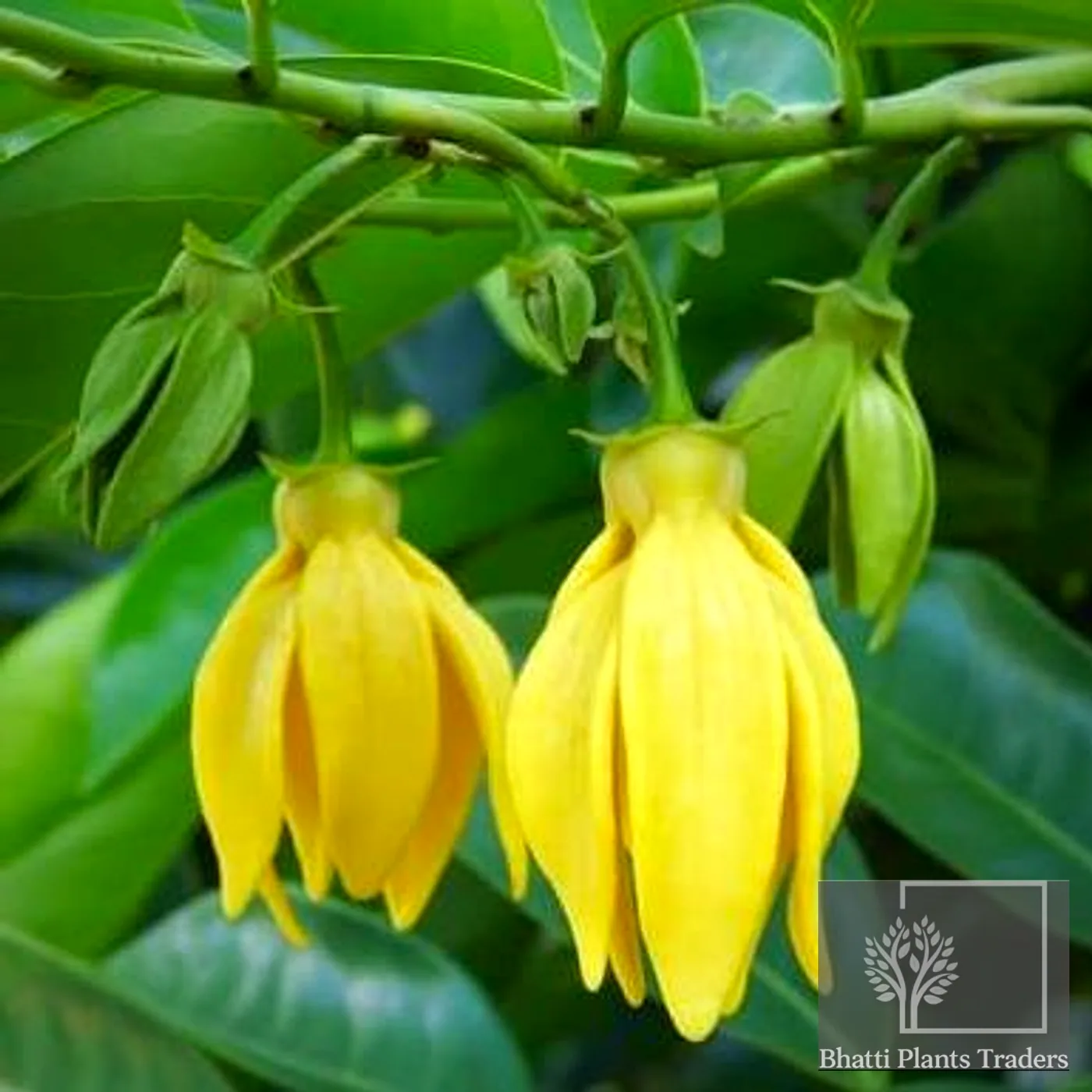
Small yellow flowers with one of the strongest scents in the garden.
fromRs 700
Staff pick