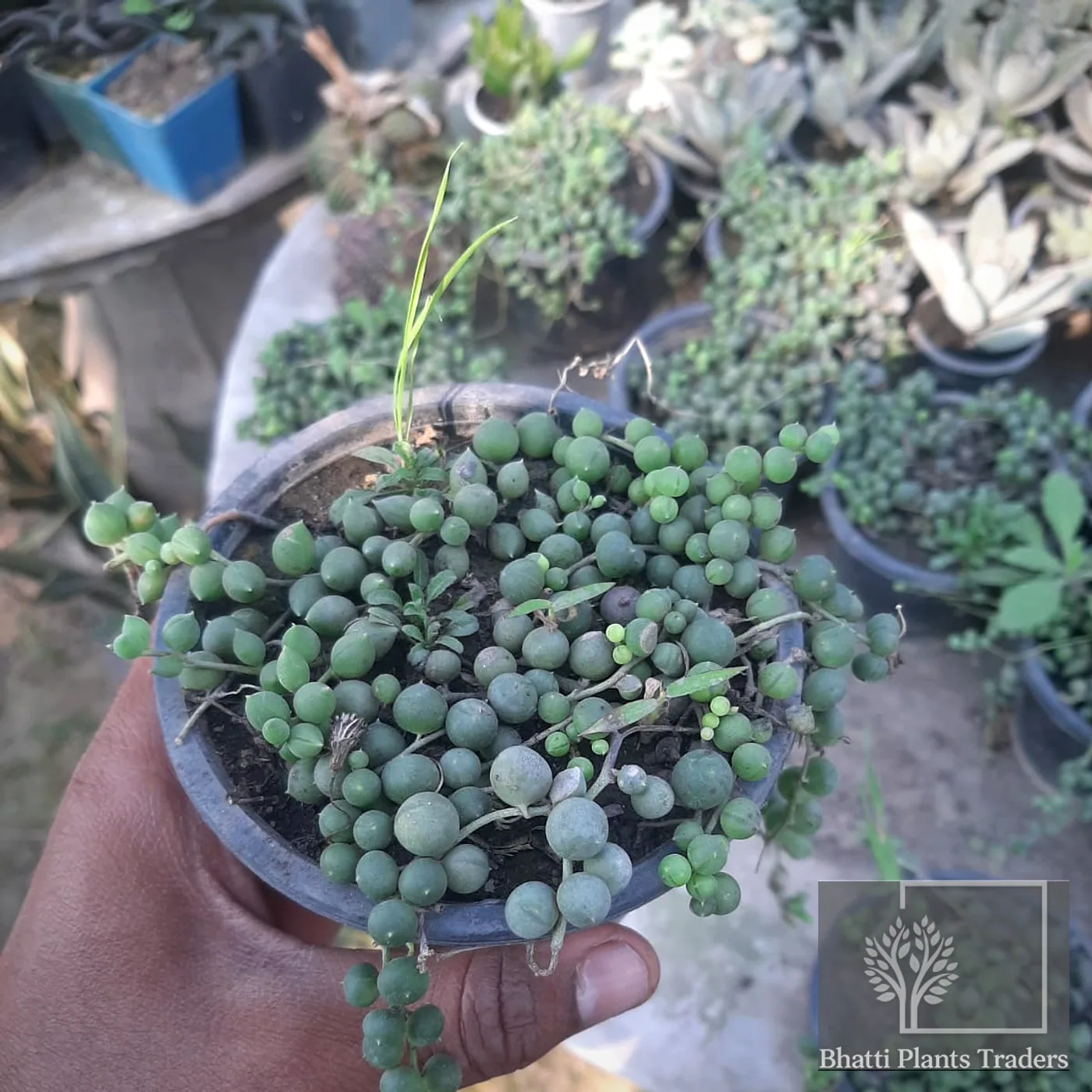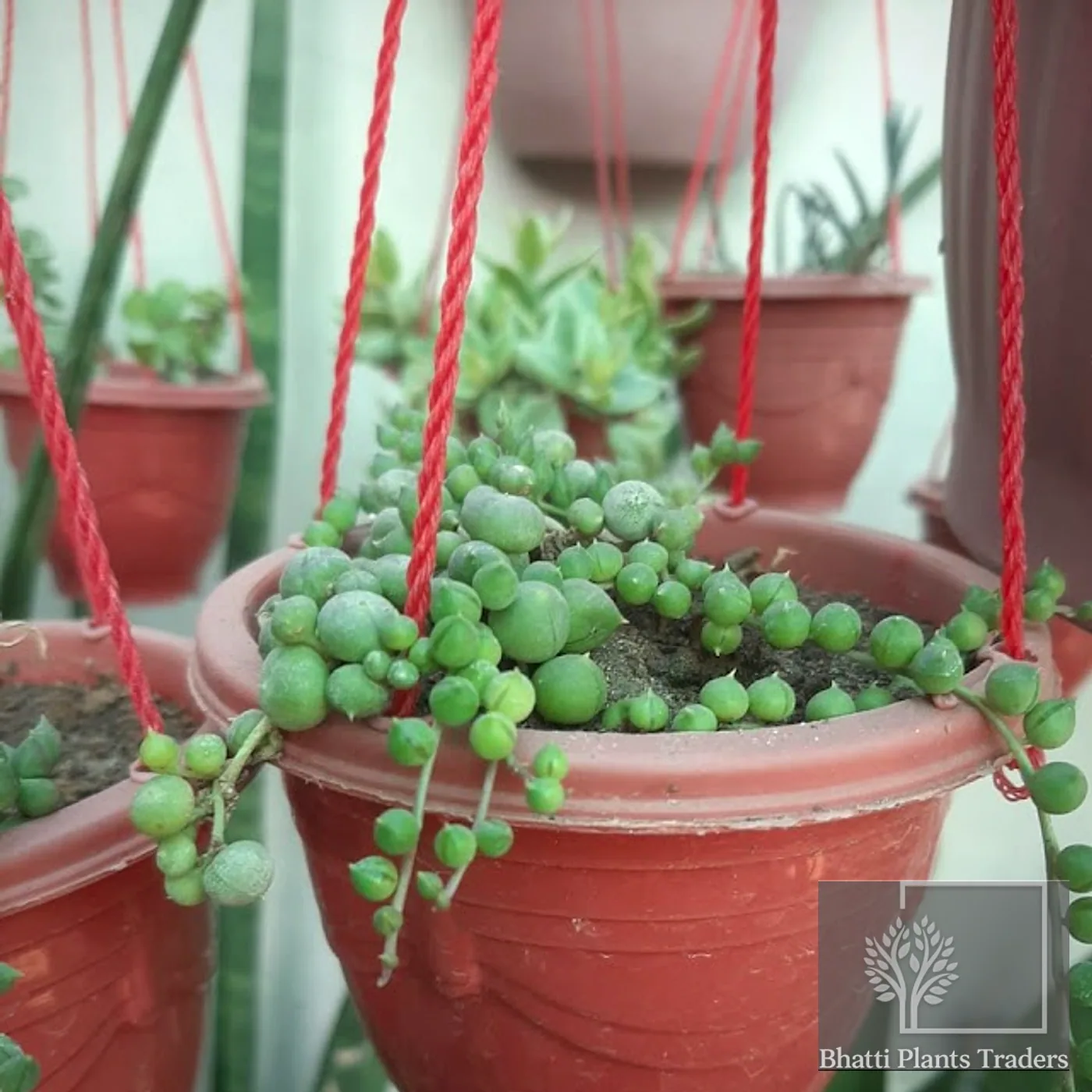
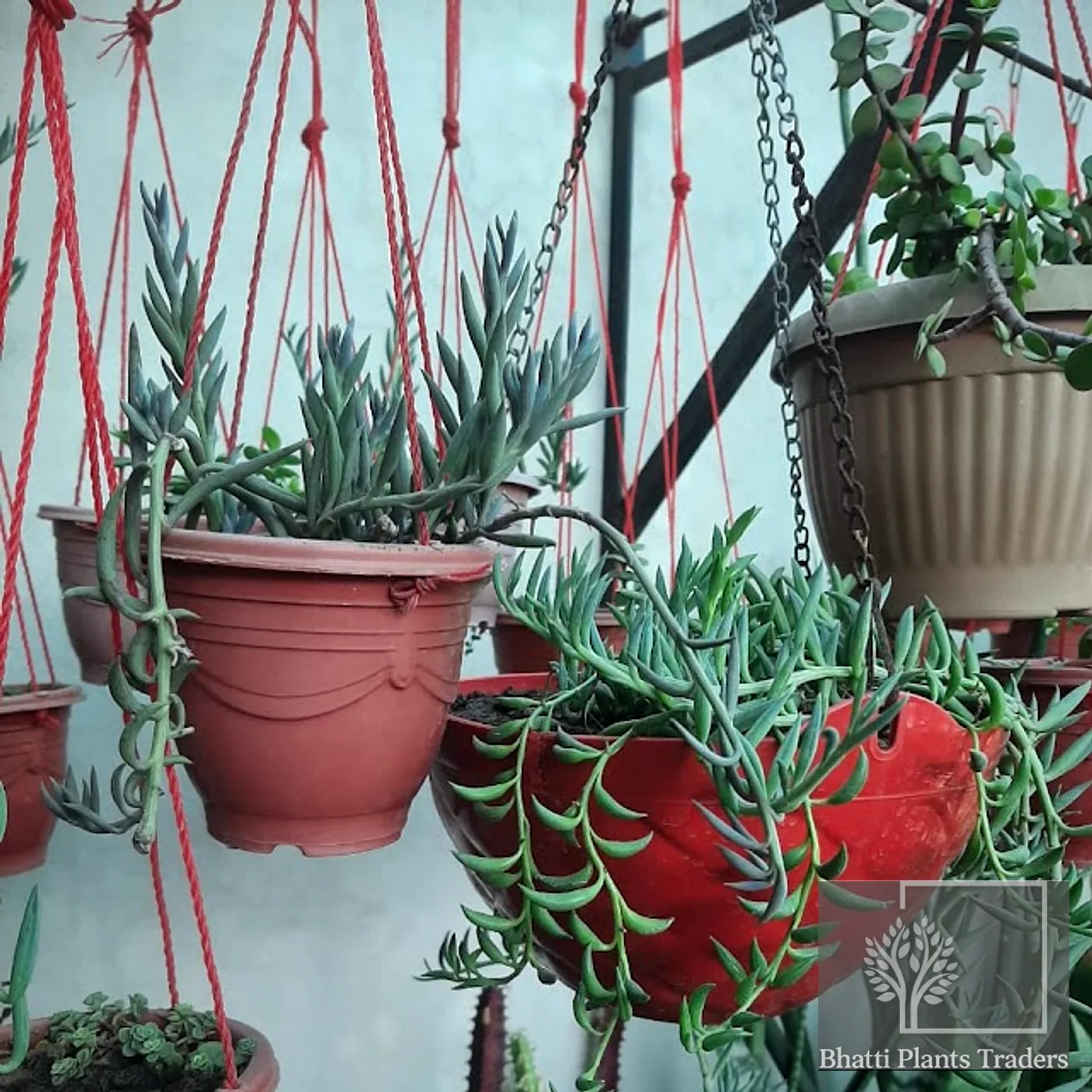
Photographs are of our actual stock, taken at the nursery. Plants are living things — expect small differences in shape and leaf count from the plant shown.
Succulents & Cacti
String of Bananas
Curio radicans
The banana-shaped cousin of string of pearls, and considerably easier. The crescent leaves are tougher, the stems grow faster, and it forgives the occasional overwatering that would finish a pearl plant outright.
If you have killed a string of pearls, buy this instead. It gives the same cascading effect within a season and is far harder to lose.
- Much more forgiving than string of pearls
- Faster growing — fills a basket within a season
- Tolerates more direct sun than most trailing succulents
Rs 1,300for the 10 inch pot
Inclusive of pot and mix. Delivery Rs 350, free over Rs 5,000.
1
4.7(64 reviews) In stock, dispatched in 1–2 working days
Packed by hand
Dispatched in 1–2 working days
7-day guarantee
Replaced or refunded if damaged
Grown by us
Never bought in and resold
At a glance
- Mature size
- Trails 60 cm – 1.2 m
- Growth rate
- Fast
- Difficulty
- Easy to keep
- Around pets
- Keep away from cats, dogs and small children
Bright lightShelf or hangingBalcony
How to look after your String of Bananas
Written for Pakistani conditions — long hot summers, dry winter air, and hard tap water. Follow this rather than advice written for a temperate climate.
- Light
- Bright indirect light, or gentle direct morning sun. Harsh afternoon sun shrivels the beads.
- Water
- Every 2–3 weeks. The beads are the gauge: plump means hydrated, slightly flattened means it is time.
- Humidity
- Low. Never mist — water sitting between the beads causes rot.
- Soil
- Cactus mix with extra perlite, in a shallow hanging pot. These are shallow-rooted plants.
- Feeding
- Dilute feed once in spring and once in midsummer.
- Temperature
- 15–32°C. Bring inside below 10°C.
If something goes wrong
Beads shrivelling and going flat
Why it happens: Underwatering, or roots that have died back from earlier overwatering.
What to do: Water thoroughly. If there is no recovery in a week, unpot and inspect the roots.
Bare, stringy strands at the top of the pot
Why it happens: Age and low light.
What to do: Cut the long strands, lay them on the soil surface, and they root in place to refill the crown.
You might also like
Bestseller