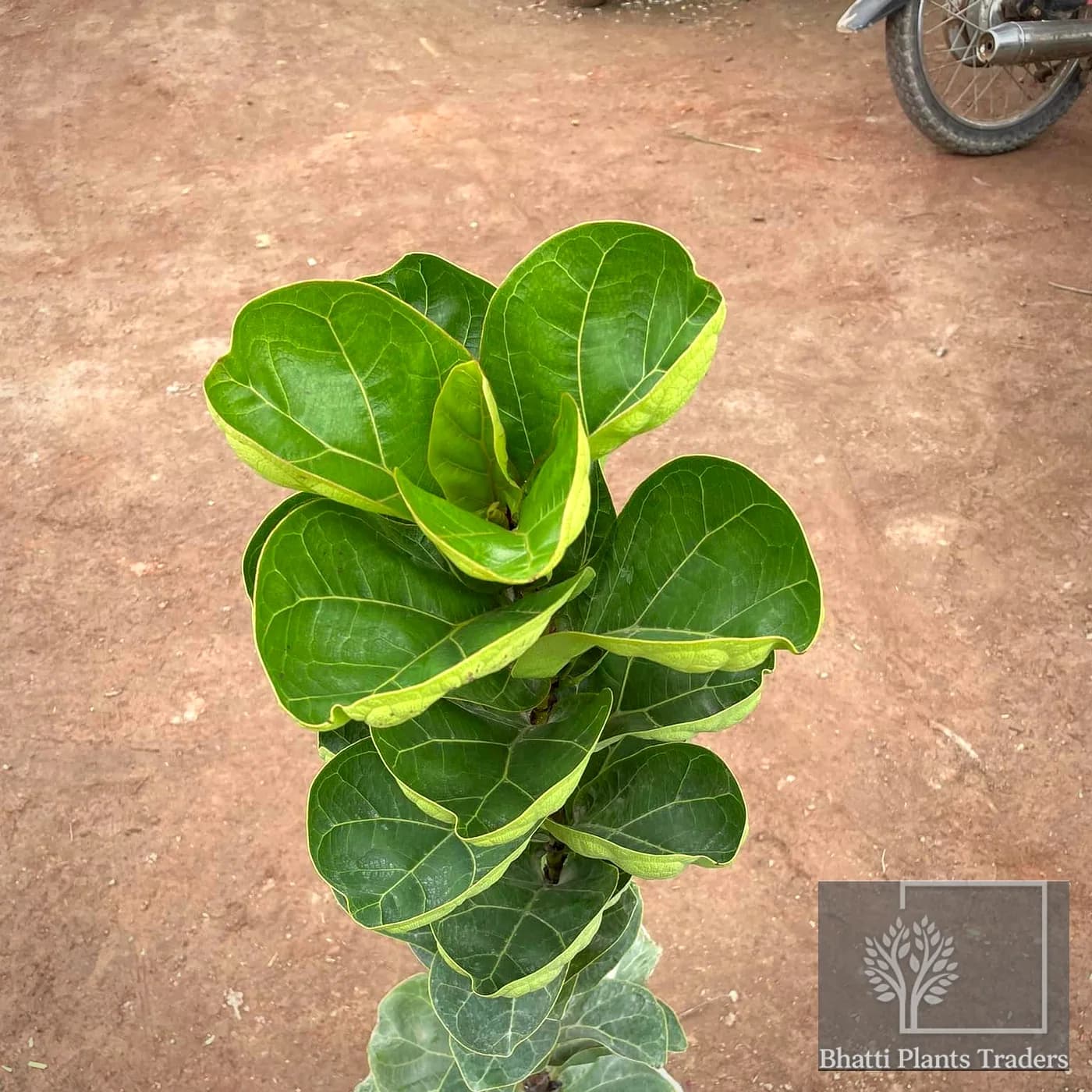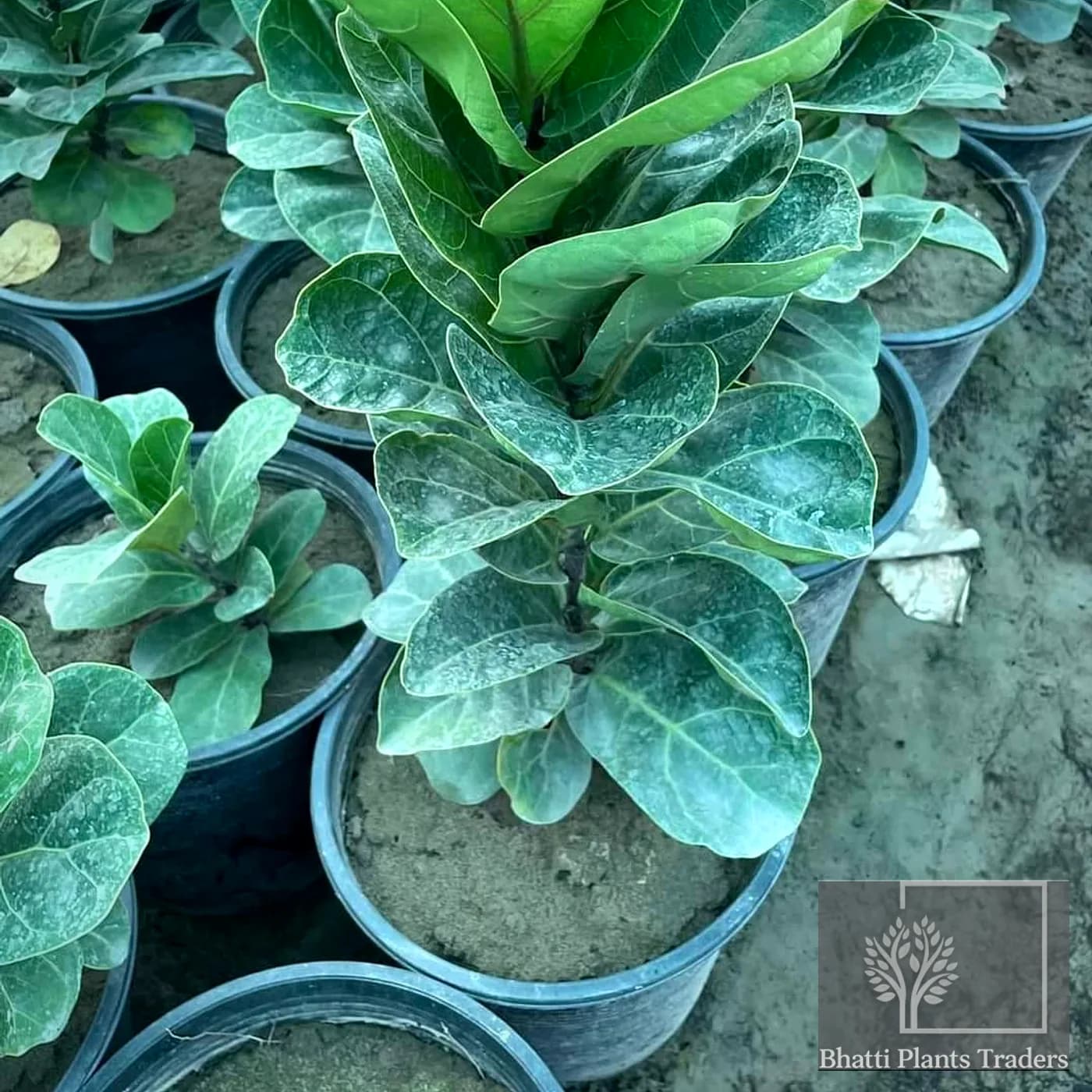
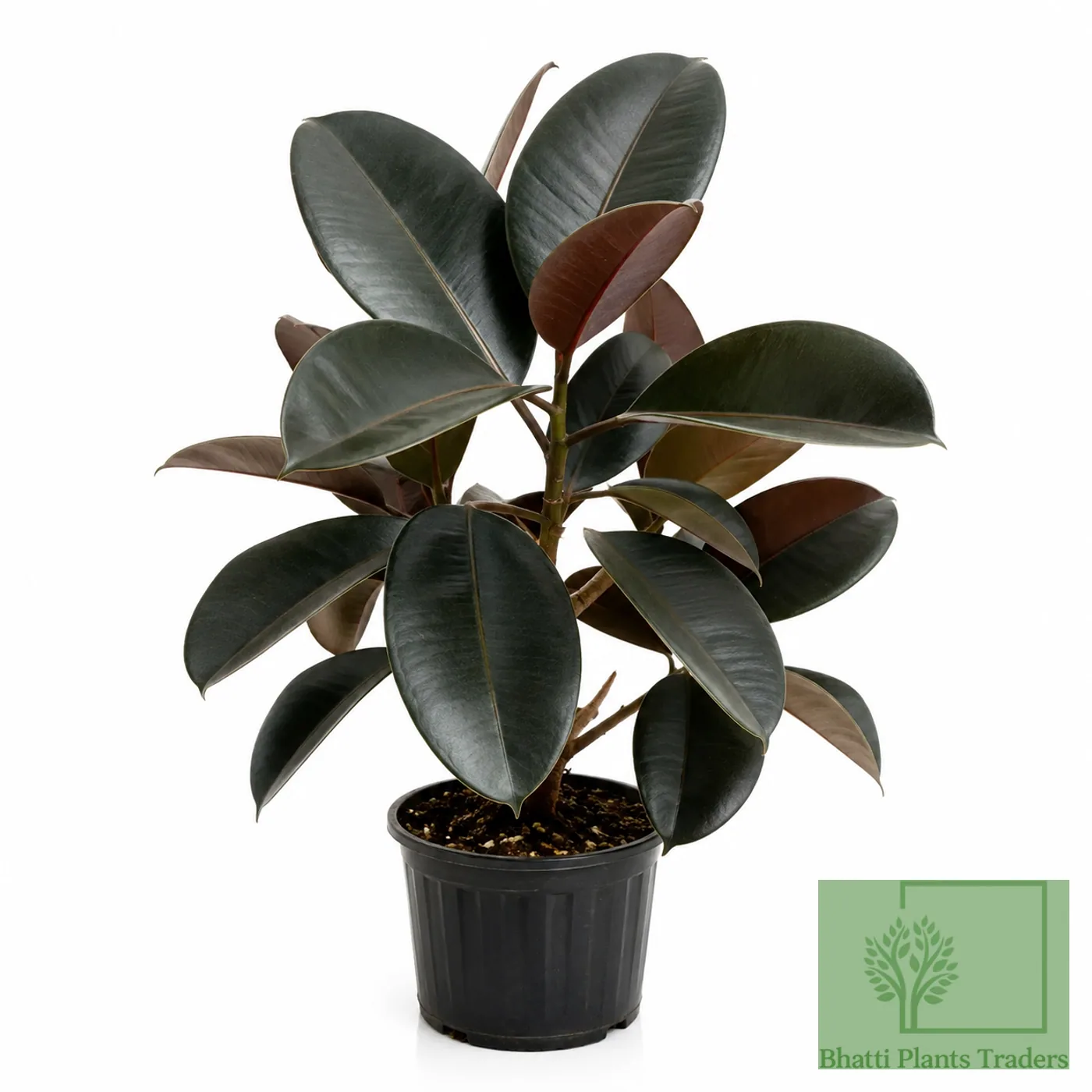
 Illustration
The first image is a studio illustration showing the plant and pot shape. The other 2 photographs are of our own stock at the nursery — those are what the plant actually looks like on the bench.
Indoor Plants
Black Rubber Plant
Ficus elastica ‘Abidjan’
In shade the leaves read as very dark green. Move it into strong light and the burgundy comes forward until the whole plant looks almost black, with new leaves unfurling from a bright red sheath. It is one of the few genuinely dark-foliage plants that stays dark indoors.
Structurally it is a rubber plant, which means it is tough. Thick, leathery leaves hold water, it shrugs off dry air, and it will forgive a fortnight of neglect. If you want the drama of a fiddle leaf fig without the temperament, this is the answer.
- Darkest foliage we grow — deepens further in strong light
- Thick, leathery leaves cope with dry indoor air
- Much more forgiving than a fiddle leaf fig at a similar size
Rs 2,300for the 12 inch pot
Inclusive of pot and mix. Delivery Rs 350, free over Rs 5,000.
1
4.8(52 reviews) In stock, dispatched in 1–2 working days
Packed by hand
Dispatched in 1–2 working days
7-day guarantee
Replaced or refunded if damaged
Grown by us
Never bought in and resold
At a glance
- Mature size
- 1.5–2.5 m indoors
- Growth rate
- Moderate to fast
- Difficulty
- Easy to keep
- Around pets
- Keep away from cats, dogs and small children
Bright lightFloor plantAir purifying
How to look after your Black Rubber Plant
Written for Pakistani conditions — long hot summers, dry winter air, and hard tap water. Follow this rather than advice written for a temperate climate.
- Light
- Bright light, including a few hours of direct morning sun. Ficus dislikes being moved — pick a spot and leave it.
- Water
- When the top 3–4 cm dries out. Consistency matters more than volume; erratic watering causes leaf drop.
- Humidity
- Moderate to high. Dry air causes leaf-edge browning on fiddle leaf figs in particular.
- Soil
- Well-draining, loam-based mix.
- Feeding
- Balanced feed every 3 weeks from March to September.
- Temperature
- 18–32°C. Above 13°C in winter, away from draughts.
If something goes wrong
Sudden leaf drop after coming home
Why it happens: Shock from the change in light and humidity.
What to do: Normal. Keep conditions steady and do not repot for at least a month. New growth follows.
Brown blotches spreading from the leaf edge
Why it happens: Overwatering or root damage.
What to do: Check that water is draining freely and let the mix dry further between waterings.
Leaning toward the window
Why it happens: Phototropism.
What to do: Turn the pot a quarter-turn every fortnight.
You might also like
Bestseller